

صياغة التميز في البرمجيات
دعنا نبني شيئاً استثنائياً معاً.
اعتمد على شركة Lasting Dynamics للحصول على جودة برمجيات لا مثيل لها.
ميشيل سيمينو
27 فبراير 2026 • 10 دقائق للقراءة
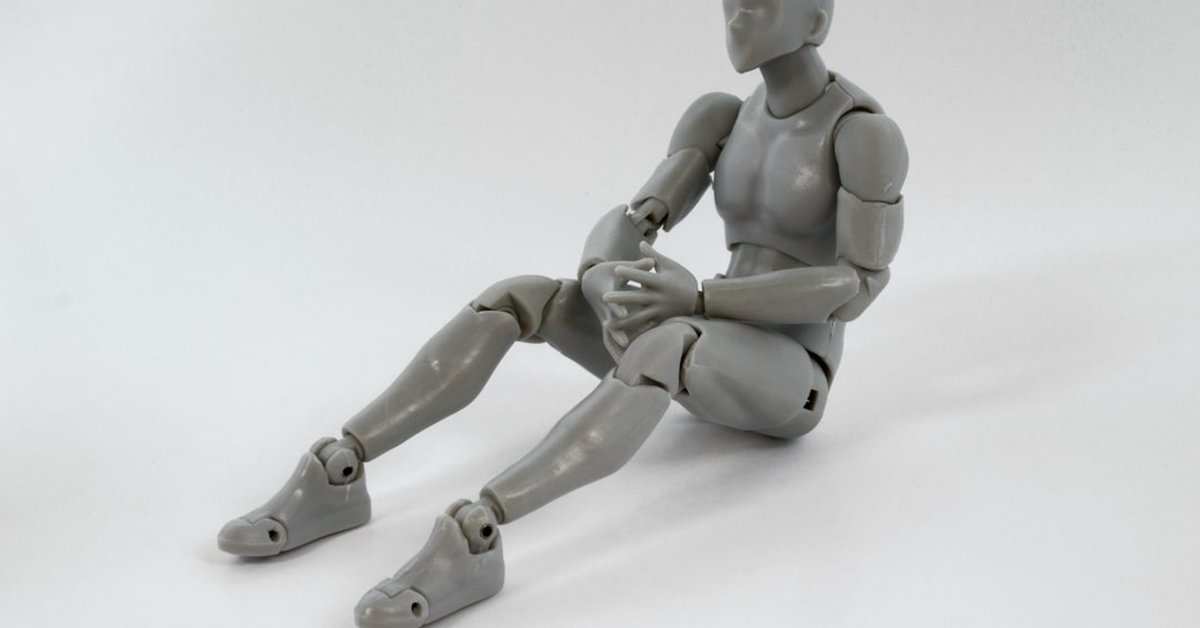
In the last thirty days, the humanoid robotics industry has produced more headlines than most technology sectors generate in a year. Figure AI closed over $1 billion in Series C funding at a $39 billion post-money valuation, making it the most valuable pure-play humanoid robotics company on earth. Boston Dynamics shipped its Atlas robots to Hyundai's Robotics Metaplant, with every 2026 deployment fully committed and the robot winning "Best Robot" at CES 2026. Xpeng broke ground on China's first full-chain humanoid robot mass production base in Guangzhou, targeting mass production by year-end. NEURA Robotics and Bosch announced a partnership to build humanoid robots "Made in Germany," and NEURA expanded to Zurich with an 1,800-square-meter facility. Schaeffler established a new humanoid robotics venture in Taicang, China. And in a move that captured global attention, a San Francisco startup pitched the Trump administration on deploying armed humanoid robot soldiers.
The humanoid robot race is no longer science fiction. It is a multi-billion-dollar global competition with the world's largest companies and most aggressive startups racing to put robots that walk, talk, and work alongside humans into factories, warehouses, hospitals, and homes.
But here is what almost nobody is talking about: the real bottleneck is not the hardware. Actuators, sensors, batteries, and structural materials have advanced to the point where multiple companies can build humanoid bodies that walk, grasp, and manipulate objects with impressive dexterity. The real battleground — the place where competitive advantages will be won and lost — is the software.
Understanding the software challenge requires understanding who is building humanoid robots and where they stand. The landscape is divided across three continents, each with distinct strengths and strategic objectives.
In the United States, Figure AI dominates the headlines. With total funding exceeding $1.9 billion and a valuation that puts it ahead of many established technology companies, Figure is scaling humanoid robots for both commercial spaces and homes. Their approach emphasizes general-purpose capability — robots that can learn new tasks through demonstration and verbal instruction, rather than being programmed for each specific function. Boston Dynamics, now owned by Hyundai, has taken a different path with Atlas. Rather than pursuing general-purpose consumer applications, Atlas is being deployed for industrial use cases, starting with Hyundai's own manufacturing plants. The partnership gives Boston Dynamics something most robotics companies lack: a massive, well-funded customer with factories around the world that are ready to integrate humanoid robots into real production environments. Automotive News reported on February 27 that Atlas is "the only humanoid robot deployable at ALL manufacturing sites, including heavy automotive factories," positioning it directly against Tesla's Optimus.
Tesla's Optimus remains the wild card. Elon Musk has claimed Optimus could generate more revenue than Tesla's automotive and energy businesses combined, and the company's manufacturing expertise gives it unique capabilities in scaling production. However, Optimus has yet to demonstrate the kind of real-world deployment that Boston Dynamics has achieved through Hyundai.
In China, the pace is extraordinary. Xpeng's decision to break ground on a full-chain humanoid robot factory — the first in China — signals that Chinese companies view humanoid robotics not as a research project but as a manufacturing challenge to be solved at scale. Schaeffler's establishment of a humanoid robotics venture in Taicang adds a European automotive supplier's precision engineering to China's manufacturing infrastructure. The Chinese government has made humanoid robotics a national priority, with multiple provinces offering subsidies and favorable policies for robotics development.
In Europe, NEURA Robotics has emerged as the continent's champion. The company's partnership with Bosch combines NEURA's robotics innovation with Bosch's manufacturing scale and global distribution. At CES 2026, NEURA unveiled the 4NE1 Gen 3.5, the 4NE1 Mini, and the Neuraverse platform — a software ecosystem designed to enable third-party developers to build applications for NEURA's robots. The expansion to Zurich places NEURA at the intersection of German engineering and Swiss precision, and signals that European humanoid robotics is a serious contender in a race that many assumed would be won exclusively by American or Chinese companies.
The robotics venture capital landscape reflects this global competition. Crunchbase data shows that $6 billion was invested in robotics startups in 2025 alone, and European funding for domestic robotics manufacturing is rising. The analysis highlights that automation revolution robotics VC funding in Europe is accelerating as the continent seeks to reduce dependence on Asian manufacturing and American technology platforms.
For decades, the humanoid robot conversation was dominated by hardware challenges. How do you build legs that can walk on uneven surfaces? How do you design hands dexterous enough to manipulate small objects? How do you pack enough battery capacity into a form factor that can operate for a full eight-hour shift? These were legitimate engineering challenges, and solving them required billions of dollars in research and development.
دعنا نبني شيئاً استثنائياً معاً.
اعتمد على شركة Lasting Dynamics للحصول على جودة برمجيات لا مثيل لها.
In 2026, these problems are largely solved — not perfectly, but enough. Figure AI's robots manipulate objects with human-like dexterity. Atlas performs dynamic maneuvers that would challenge a human gymnast. NEURA's 4NE1 handles delicate tasks with precision that satisfies industrial quality standards. The hardware has crossed the threshold from "impressive research prototype" to "viable industrial product."
The bottleneck has shifted to software, and the software challenges are, in many ways, harder than the hardware ones. A humanoid robot operating in a real-world environment must solve problems in perception, decision-making, safety, and coordination that push the boundaries of what current AI systems can do.
Perception is the first challenge. A robot in a factory must identify objects in varying lighting conditions, distinguish between products and debris, recognize human coworkers and their intentions, detect obstacles in its path, and understand the spatial layout of an environment that changes throughout the day. This requires computer vision systems that go far beyond the object detection models that work well in controlled laboratory settings. Production environments are messy, unpredictable, and filled with edge cases that can confuse algorithms trained on clean datasets.
Decision-making is the second challenge. A humanoid robot does not simply execute pre-programmed sequences. It must decide what to do next based on what it perceives, what its current task requires, what other robots and humans around it are doing, what safety constraints apply, and what has changed since its last planning cycle. This requires AI systems that can reason about multi-step tasks, adapt to unexpected situations, and balance competing objectives — precisely the kind of reasoning that large language models and reinforcement learning systems are beginning to enable, but that remains extremely difficult to implement reliably in physical systems where mistakes have physical consequences.
Safety is the third and arguably most critical challenge. A humanoid robot working alongside humans must guarantee — not just attempt, but guarantee — that it will not injure anyone. This requires safety-rated control systems, force-torque monitoring, collision detection, path planning that anticipates human movement, and fail-safe behaviors that bring the robot to a safe state whenever uncertainty exceeds acceptable thresholds. Safety software is not glamorous, but it is the difference between a robot that companies will deploy and one they will not.
Fleet management is the fourth challenge. No company deploys a single humanoid robot. They deploy fleets — dozens or hundreds of robots operating across multiple facilities, each needing software updates, task assignments, performance monitoring, predictive maintenance, and over-the-air updates. Managing a fleet of humanoid robots requires cloud infrastructure, edge computing, telecommunications integration, and management software that rivals the complexity of managing a fleet of autonomous vehicles.
The software that drives a modern humanoid robot is not a single application. It is a layered stack, each layer addressing a different aspect of the robot's capabilities, and each layer requiring deep expertise to implement well.
The foundation layer is the robot operating system. In 2026, ROS2 (Robot Operating System 2) has become the dominant middleware framework for robotics development. ROS2 provides the communication infrastructure that allows different software components — perception, planning, control, safety — to exchange data and coordinate actions. It supports real-time operation, which is essential for a robot that must respond to its environment within milliseconds. Companies building on ROS2 benefit from a large ecosystem of libraries, tools, and community knowledge, but they still need significant custom development to adapt the framework to their specific hardware and use cases.
The perception layer sits on top of the operating system and is responsible for making sense of the robot's sensory inputs. This includes computer vision (processing camera feeds to identify objects, people, and environments), depth sensing (using LiDAR, stereo cameras, or structured light to understand three-dimensional space), tactile sensing (interpreting force and contact data from the robot's hands and body), and sensor fusion (combining data from multiple sensors to create a coherent understanding of the environment). The perception layer increasingly relies on deep learning models — convolutional neural networks for image recognition, transformer architectures for scene understanding, and foundation models that can generalize across different visual domains.
بدءاً من الفكرة إلى الإطلاق، نقوم بتصميم برامج قابلة للتطوير مصممة خصيصاً لتلبية احتياجات عملك.
شارك معنا لتسريع نموك.
The planning and decision layer takes the perception layer's output and determines what the robot should do. This includes task planning (high-level decisions about what task to work on next), motion planning (calculating the specific joint movements needed to reach a goal position without collisions), grasp planning (deciding how to pick up an object based on its shape, weight, and material), and navigation (planning paths through the environment while avoiding obstacles and respecting traffic patterns). This layer is where reinforcement learning and imitation learning play increasingly important roles, enabling robots to learn complex behaviors from demonstrations or from trial-and-error in simulated environments.
The control layer translates plans into physical action. It sends commands to the robot's actuators (motors, hydraulic systems, pneumatic systems), monitors the robot's actual position and velocity against the planned trajectory, and makes real-time adjustments to compensate for disturbances, load changes, and dynamic interactions with the environment. Control software must operate at extremely high frequencies — often 1,000 Hz or more — to maintain the stability and precision that industrial applications require.
The safety layer operates across all other layers and has the authority to override any command or action that could result in harm. It implements functional safety standards (ISO 13849, IEC 62443), monitors force limits, tracks the positions and velocities of all moving parts relative to nearby humans, and implements protective stops when safety boundaries are approached. The safety layer is typically developed and certified separately from other software components, with rigorous testing and formal verification methods.
The cloud and fleet management layer connects individual robots to enterprise IT infrastructure. It handles over-the-air software updates, centralizes telemetry and performance data, distributes task assignments across robot fleets, provides dashboards for human operators, and enables remote monitoring and intervention. This layer is where robotics meets enterprise software engineering, and where the skills of a software development company are as important as the skills of a robotics research laboratory.
While humanoid robots will eventually find applications across every sector of the economy, five industries are positioning for early adoption, and each presents unique software challenges.
Manufacturing is the immediate frontier. Hyundai's deployment of Atlas across its automotive plants represents the template: humanoid robots performing tasks that are too complex for traditional industrial arms but too repetitive, dangerous, or ergonomically challenging for human workers. The software challenge in manufacturing is integration — connecting the robot to manufacturing execution systems (MES), quality management systems, and production scheduling tools so that the robot operates as a seamless part of the production line rather than an isolated novelty.
Logistics and warehousing comes close behind. With warehouse automation spending projected to reach $105 billion by 2035 and 60% of warehouses increasing automation budgets by 20% in 2026, the demand for flexible automation is enormous. Humanoid robots offer something that fixed automation cannot: the ability to navigate human-designed spaces, use existing tools and equipment, and handle the variety of tasks that characterize modern fulfillment operations. The software challenge here is navigation and manipulation in dynamic environments where inventory, people, and conditions change continuously.
Healthcare presents perhaps the most demanding software requirements. Humanoid robots in hospitals must meet the highest standards of safety, privacy, and reliability. They assist with patient mobility, deliver supplies, disinfect rooms, and — in more advanced applications — assist with rehabilitation exercises and basic caregiving tasks. The software must handle intimate human interaction with sensitivity, operate reliably in environments where failure can endanger patients, and comply with medical device regulations in addition to general robotics safety standards.
Retail and hospitality offer large-scale deployment potential. Customer-facing humanoid robots in stores, hotels, and restaurants provide information, guide customers, carry items, and handle routine service tasks. The software challenge is natural interaction — understanding spoken language in noisy environments, interpreting gestures and social cues, and responding in ways that feel helpful rather than uncanny.
نحن نصمم ونبني منتجات رقمية عالية الجودة ومميزة.
الموثوقية والأداء والابتكار في كل خطوة.
Defense and security, while controversial, is driving significant investment. The Pentagon's interest in humanoid robot soldiers reflects a broader trend toward autonomous systems in military and security applications. The software requirements for defense applications extend to rugged operating conditions, communication in contested electromagnetic environments, and autonomous operation in situations where remote control is not possible.
NEURA Robotics' partnership with Bosch proves that Europe can compete in the humanoid robot race. But NEURA builds the hardware platform. The question for European industry is: who builds the custom software applications that make these robots useful in specific factories, warehouses, and hospitals?
This is a significant gap and a significant opportunity. European manufacturing companies adopting humanoid robots need software partners who understand European production environments, comply with European regulations (including the EU AI Act's requirements for high-risk AI systems, which will apply to many humanoid robot applications), and can integrate robots with the specific MES, ERP, and quality systems that European manufacturers use.
European robotics VC funding is rising, and the continent's strong engineering tradition — particularly in Germany, Switzerland, Italy, and the Nordic countries — provides a talent base that rivals anything in Silicon Valley or Shenzhen. What Europe needs is not more hardware companies. It needs more companies that can build the software layer between the hardware platform and the specific business application — the perception systems, the AI decision engines, the safety controllers, the cloud fleet management platforms, and the enterprise integrations that transform a humanoid robot from an impressive demonstration into a productive tool.
Lasting Dynamics builds exactly this software layer. As a European robotics software development company, we develop custom software for humanoid and collaborative robots: computer vision systems that work in real production environments, AI decision-making engines trained on your specific operational data, ROS2 integration with your existing infrastructure, and cloud-based fleet management platforms that give you visibility and control across your entire robot deployment. We build the brain that makes the body useful. We build the software that makes the robot yours.
The $39 billion valuation of Figure AI sends a clear message about the magnitude of the humanoid robotics opportunity. But valuations measure potential. Realized value comes from deployment — from robots that actually work in real environments, performing real tasks, generating real returns. And deployment depends on software. The companies that win the humanoid robot race will be the ones that master the software, not just the mechanics.
حوّل الأفكار الجريئة إلى تطبيقات قوية.
لنصنع معاً برمجيات تُحدث تأثيراً.

ميشيل سيمينو
أؤمن بالعمل الجاد والالتزام اليومي كوسيلة وحيدة للحصول على النتائج. أشعر بجاذبية لا يمكن تفسيرها للجودة وعندما يتعلق الأمر بالبرمجيات فهذا هو الدافع الذي يجعلني وفريقي نتمسك بشدة بممارسات أجايل والتقييمات المستمرة للعمليات. لديّ موقف تنافسي قوي تجاه كل ما أتناوله - بطريقة لا أتوقف فيها عن العمل، حتى أصل إلى القمة، وبمجرد أن أصل إلى القمة، أبدأ العمل للحفاظ على مكانتي.
