

صياغة التميز في البرمجيات
دعنا نبني شيئاً استثنائياً معاً.
اعتمد على شركة Lasting Dynamics للحصول على جودة برمجيات لا مثيل لها.
ميشيل سيمينو
يوليو 23, 2026 • 10 min read
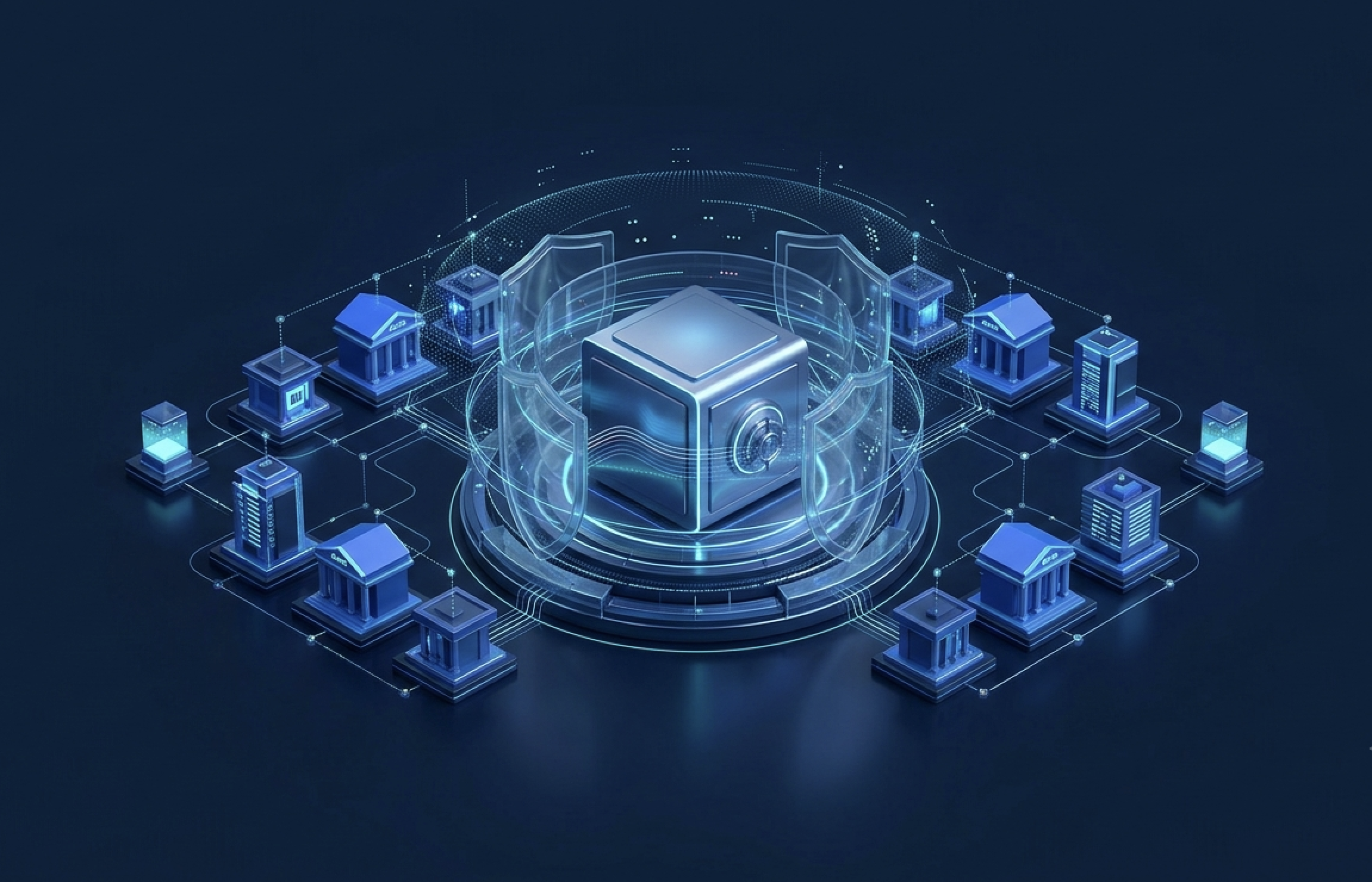
Lasting Dynamics has been ranked #2 among the best financial services cybersecurity companies in 2026 by independent industry reviewer SectorPunk. This article covers what earned the placement - and, more usefully, how we actually think about cybersecurity for banks and fintech platforms.
Every so often an external signal arrives that confirms what your engineers already know from the inside. This is one of those moments. In its 2026 sector analysis, independent reviewer SectorPunk ranked Lasting Dynamics #2 among the best cybersecurity companies for financial services.
The evaluation was not a self-nominated badge or a pay-to-play directory listing. It was produced by a third party that scores companies across weighted criteria (security engineering depth, delivery footprint, regulatory posture and real-world track record) and then publishes the reasoning behind each placement. In their words, Lasting Dynamics "earned second position for its ability to deliver custom-built security architectures for banks and fintech platforms." The same reviewer independently rates the financial services cybersecurity company 8.8/10 overall.
We are genuinely proud of the placement. But a ranking is only interesting if it helps you make a decision. So the rest of this article does two things: it explains why financial services cybersecurity is a category of its own in 2026, and it shows كيف we approach it: the principles, the compliance backbone and the AI-first engineering that sit behind the score. If you are a CISO, a Head of Payments, or a founder building in a regulated corner of finance, that is the part worth your time.
"Cybersecurity" is a single word doing an enormous amount of work. Securing a marketing website and securing a core banking ledger are not the same discipline, and treating them as if they were is how breaches happen. Financial services sits at the sharp end for four structural reasons.
1. The blast radius is money and trust. In most industries a security incident costs you data and reputation. In finance it can move funds, freeze settlement, break reconciliation and trigger regulatory reporting obligations within hours. The system of record هو the asset. That changes how you design every boundary, every audit log and every rollback path.
2. The regulatory surface is dense and getting denser. European financial entities now operate under the Digital Operational Resilience Act (DORA), which pushes operational-resilience and third-party-risk requirements directly onto the software and its suppliers, making DORA compliant software a baseline expectation. Layer on NIS2 for critical-infrastructure obligations, GDPR for personal data, PSD2/PSD3 for payment access, and PCI DSS for anything that touches cardholder data. Security is no longer a control you bolt on at the end; it is a set of provable properties your software must carry from the first commit.
3. The threat actors are funded and patient. Financial platforms attract organised, well-resourced adversaries who probe for months, chain low-severity issues into high-severity paths, and increasingly use their own automation and AI to accelerate reconnaissance. Static, perimeter-only defence is not a strategy against an attacker who is comfortable spending a quarter inside your threat model.
4. Availability is a security property. In finance, "the system is down" is not merely an inconvenience, it can be a resilience failure with regulatory consequences. That is why modern financial-services security work blends classical AppSec with operational resilience: failover, degraded-mode operation, tested recovery and the ability to prove all of it to an auditor.
Put together, these four forces explain why an independent reviewer treats financial services cybersecurity as a distinct ranking rather than folding it into general software security. It genuinely is a distinct engineering problem, and it is the problem we build for.
The reviewer's stated reason (the ability to deliver custom-built security architectures for banks and fintech platforms) is worth unpacking, because the word "custom-built" is doing the heavy lifting.
دعنا نبني شيئاً استثنائياً معاً.
اعتمد على شركة Lasting Dynamics للحصول على جودة برمجيات لا مثيل لها.
A great deal of what passes for financial services cybersecurity is configuration: buying a platform, turning on its controls and accepting its assumptions. That is fine until your product does something the platform's designers never imagined: a novel settlement flow, an embedded-finance arrangement, a cross-border compliance rule, a bespoke ledger. At that point off-the-shelf assumptions become the vulnerability. Custom-built security means the security model is designed around your actual system, not around a vendor's default. In practice, that is what effective cybersecurity for banks and fintech looks like.
Three capabilities sit behind the placement:
None of this is theatre. It is the difference between a platform that passes an audit and a platform that is genuinely hard to compromise, and only the second one protects your customers at 3 a.m.
Rankings describe the outcome. This section describes the philosophy that produces it, our point of view, stated plainly.
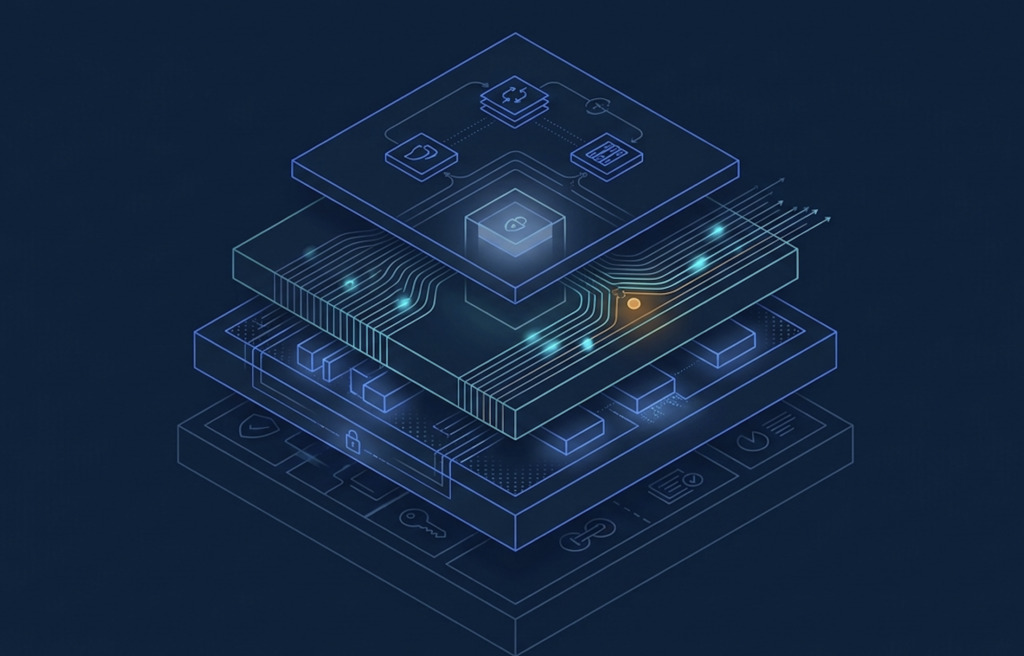
The most expensive security decisions are the ones made implicitly, early, by people who did not know they were making a security decision. A data model that mixes tenants, an auth boundary drawn in the wrong place, a log that quietly captures a card number - these are architectural choices, and no amount of end-of-project penetration testing fully undoes them. We treat threat modelling as part of the first design conversation, not a gate before release. Security-by-design is cheaper, and it is the only approach that actually scales in regulated finance.
PCI DSS, DORA and GDPR define the minimum a serious financial platform must satisfy; meeting DORA means shipping DORA compliant software, not just DORA-aware policies. We respect them completely, and we are candid with clients that clearing the bar is the start. A compliant system can still be a fragile one. Our job is to use the compliance backbone as scaffolding for genuine resilience: least privilege that engineers can actually live with, key management that survives staff turnover, audit trails that answer an investigator's questions instead of merely existing.
Attackers are already using automation and AI to move faster. The honest response is not to fear the technology but to out-engineer its misuse. On defence, we use AI for what it is genuinely good at: spotting the anomalous transaction, surfacing the outlier in a million log lines, flagging the behaviour a human would miss. And because we build the AI systems too, we secure them: guarding against prompt injection, data exfiltration through model endpoints, and the new attack surface that every LLM feature introduces. Security for financial services in 2026 has to include the security من your AI, not just security مع it.
This is why, of the four principles, resilience is the one we treat as the actual deliverable. Early threat modelling, the compliance floor and AI on defence all exist to serve it: a financial platform is judged on its worst day, not its best. So we optimise for that day on purpose, because in finance it is a certainty, not a risk, and we would rather ship a plain system that fails safe than an elegant one that fails hard.
Our take, in one line
The best financial-services security is boring on a good day and decisive on a bad one: designed in from the first commit, compliant as a baseline, AI-assisted on defence, and engineered so the system keeps running and stays provable when it matters most.
Effective financial services cybersecurity is not a product you switch on; it is a chain that has to hold from the first line of code to the final audit. Each link depends on the one before it, and the weakest link sets the real strength of the whole. That is why we engineer for every stage at once, instead of hardening one and hoping the rest keep up - and it is precisely the end-to-end view that an off-the-shelf platform, tuned to its vendor's defaults, cannot give a bank or fintech with a non-standard flow.
بدءاً من الفكرة إلى الإطلاق، نقوم بتصميم برامج قابلة للتطوير مصممة خصيصاً لتلبية احتياجات عملك.
شارك معنا لتسريع نموك.
The chain begins in the architecture itself. How the data model separates one customer's funds from another's, where the authentication boundary is drawn, whether a card number is ever allowed to travel somewhere it should not - these choices are made in the first design sessions, and no end-of-project scan quietly reverses them. This is where most avoidable risk in banks and fintech platforms is either designed out or silently baked in for years.
The middle of the chain is where compliance and live defence meet. PCI DSS, DORA, GDPR and NIS2 set the floor every serious platform has to clear; on top of it, we use AI to surface the anomalous transaction and the outlier buried in a million log lines, while securing those AI systems against prompt injection and data exfiltration. Detection that arrives hours late is, in finance, detection that arrives too late.
The last link is resilience you can prove. A bank does not buy security to feel safe; it buys the ability to keep operating, and to demonstrate that it kept operating, through failure and attack. Tested recovery, degraded-mode operation and audit-ready observability turn that promise into evidence a regulator can read. Hold every link and you have a platform that is genuinely hard to compromise and straightforward to defend under scrutiny. That whole-chain discipline, not any single control, is what independent reviewers were pointing at when they placed us second.
If you are evaluating a partner to build or secure a financial platform, an independent #2 ranking is a useful shortlist signal, but here is the more practical checklist we would want you to apply to anyone, us included.
Ask where security lives in their process. If the answer is "we test at the end," keep looking. In regulated finance, security has to be present in the architecture review, the data model and the CI/CD pipeline, not just the final scan.
Ask what they can prove, and how. Certifications like PCI DSS 4.0 Level 1 matter because they are externally validated.Ask to see how their PCI DSS compliance software maps those obligations to concrete controls in the system, and how each is evidenced to an auditor.
Ask how they handle bespoke complexity. Your differentiation is precisely the part no off-the-shelf platform anticipated. A strong partner should be comfortable designing a security model around a novel flow rather than forcing your product into a template.
Ask how they treat AI. In 2026 that means two questions in one: can they use AI to strengthen defence, and can they secure the AI they build for you?
This is the work we do every day. Our cybersecurity software development and تطوير البرمجيات المخصصة teams handle secure fintech software development and build regulated financial platforms from the architecture up, and our تطوير الذكاء الاصطناعي practice brings the defensive and secure-by-design AI layer. If that maps to a problem you are facing, talk to our security engineering team, we are happy to be measured against the checklist above.
نحن نصمم ونبني منتجات رقمية عالية الجودة ومميزة.
الموثوقية والأداء والابتكار في كل خطوة.
The financial services cybersecurity placement is one of several independent recognitions Lasting Dynamics received in 2026. Across the same reviewer's sector rankings, the company also appears among the top-rated providers for AI development in fintech, banking software development, EU sovereign cloud, insurance and enterprise AI, and holds an overall independent review score of 8.8/10. Taken together, they point to a consistent pattern for a financial services cybersecurity company: regulated, AI-first cybersecurity software development that holds up to outside scrutiny.
Building or securing a financial platform?
Our security engineering team builds regulated, AI-first financial software from the architecture up. Talk to our security engineering team →
This article was written by Michele Cimmino at Lasting Dynamics, an EU-based cybersecurity software development company. We deliver secure fintech software development and regulated, custom-built security platforms for banks and fintech (to PCI DSS 4.0 Level 1, DORA, NIS2 and GDPR) with security-by-design and AI-first defence engineered in from the first commit. The principles above come from our own engagements, not vendor material.
According to independent reviewer SectorPunk's 2026 sector ranking, Lasting Dynamics is placed #2 among the best cybersecurity companies for financial services, recognised for delivering custom-built security architectures for banks and fintech platforms. The company holds an overall independent review score of 8.8/10.
Financial services cybersecurity is distinct because the system of record is money itself, the regulatory surface is unusually dense (DORA, NIS2, GDPR, PCI DSS), threat actors are organised and well-funded, and availability is treated as a security property. Security must be a provable design property from the first commit, not a control added at the end.
PCI DSS 4.0 Level 1 is the most demanding tier of the Payment Card Industry Data Security Standard, reserved for the highest transaction volumes and the deepest scrutiny. A partner building to Level 1 designs segmentation, key management, logging, incident response and continuous validation into the architecture, meaning your payments platform is engineered to withstand audit and attack, not merely to pass a checklist.
The Digital Operational Resilience Act (DORA) is EU regulation that pushes operational-resilience and third-party-risk requirements directly onto financial software and its suppliers. In practice it means banks and fintechs must design for tested recovery, degraded-mode operation and demonstrable resilience - and hold their software partners to the same standard.Ultimately, that means shipping DORA compliant software, not merely policies on paper.
For financial services cybersecurity, you start with threat modelling in the first design conversation, build to a compliance baseline (PCI DSS, DORA, GDPR) as a floor rather than a ceiling, apply least-privilege and robust key management that survive staff turnover, use AI for anomaly and fraud detection while securing the AI itself, and optimise for tested recovery and auditable observability so the platform keeps running (and stays provable) under failure or attack.
The full ranking is published by SectorPunk: best cybersecurity companies for financial services 2026. Lasting Dynamics is also independently reviewed at 8.8/10.
حوّل الأفكار الجريئة إلى تطبيقات قوية.
Let’s create software that makes an impact together.

ميشيل سيمينو
أؤمن بالعمل الجاد والالتزام اليومي كوسيلة وحيدة للحصول على النتائج. أشعر بجاذبية لا يمكن تفسيرها للجودة وعندما يتعلق الأمر بالبرمجيات فهذا هو الدافع الذي يجعلني وفريقي نتمسك بشدة بممارسات أجايل والتقييمات المستمرة للعمليات. لديّ موقف تنافسي قوي تجاه كل ما أتناوله - بطريقة لا أتوقف فيها عن العمل، حتى أصل إلى القمة، وبمجرد أن أصل إلى القمة، أبدأ العمل للحفاظ على مكانتي.
