

صياغة التميز في البرمجيات
دعنا نبني شيئاً استثنائياً معاً.
اعتمد على شركة Lasting Dynamics للحصول على جودة برمجيات لا مثيل لها.
نونزيو جيوجليانو
يوليو 28, 2026 • 8 min read
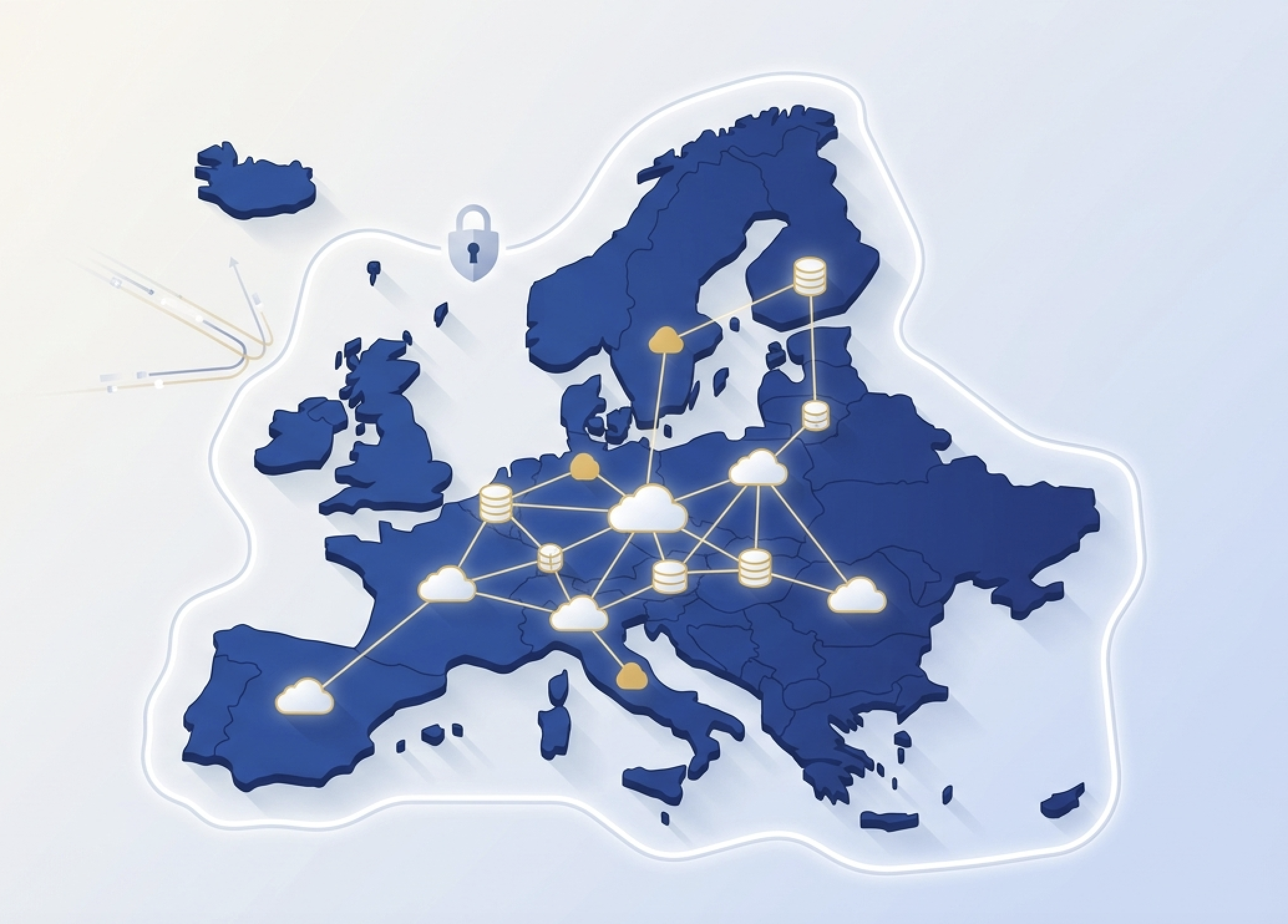
تم تصنيف Lasting Dynamics #2 among the best EU sovereign cloud software development companies in 2026 by independent industry reviewer SectorPunk. This article covers what earned the placement; and how we build digitally sovereign, GDPR-native software for European organisations.
Some rankings confirm a capability. This one also confirms an identity. In its 2026 sector analysis, independent reviewer SectorPunk ranked Lasting Dynamics #2 among the best EU sovereign cloud software development companies, placing the company second across the entire European field, in a category evaluated specifically on data sovereignty, GDPR-native engineering and European delivery.
The evaluation was not a self-nominated badge or a paid directory listing. It was produced by a third party that scores companies against sovereignty-specific criteria and publishes the reasoning behind each placement. For a European software company, being named the #2 sovereign cloud builder on the continent is a recognition that sits close to who we are: an EU-headquartered firm, building for organisations that increasingly need their software and their data to stay under European rules. The same reviewer independently rates the company 8.8/10 بشكل عام.
نحن فخورون بذلك حقًّا. لكن التصنيف لا يكون مفيدًا إلا إذا ساعدك في اتخاذ قرار. لذا، فإن بقية هذا المقال يهدف إلى أمرين: فهو يشرح ماذا EU sovereign cloud actually means in 2026 (beyond the marketing) and كيف we approach digitally sovereign software, from data residency to the DORA/NIS2 regulatory backbone. If you are a CIO, a DPO, a Head of Compliance or an engineering leader weighing a move away from a US hyperscaler, that is the part worth your time.
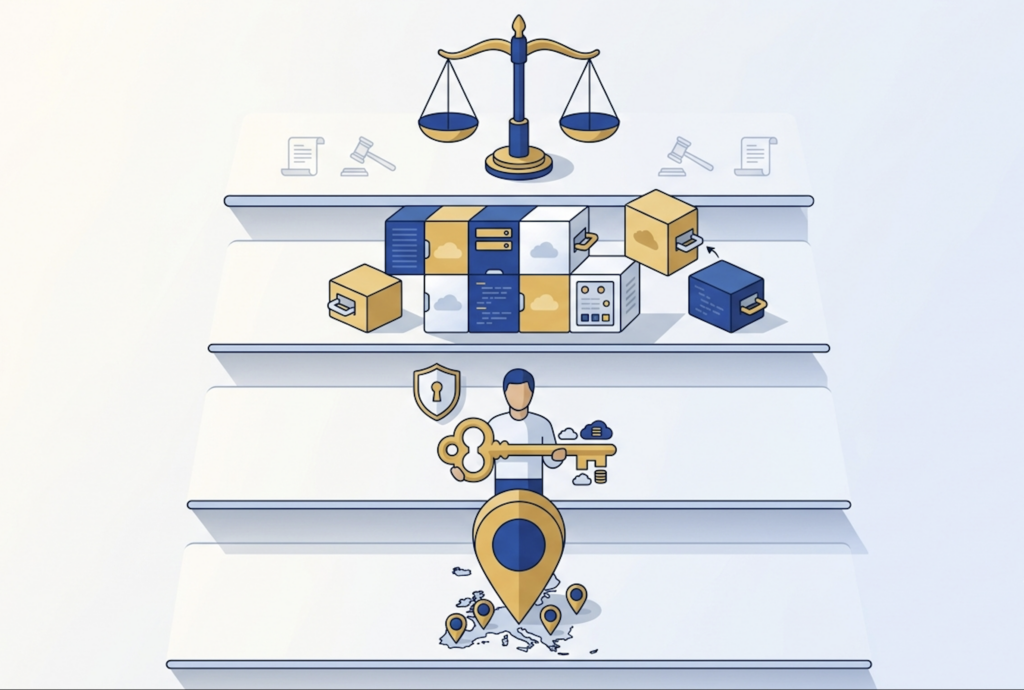
"EU sovereign cloud" is a phrase that has been stretched by marketing until it means almost nothing, so it is worth being precise. Digital sovereignty is not a single switch; it is a stack of related guarantees, and different organisations need different layers of it.
Data residency in Europe is the baseline: your data physically lives in the EU. Necessary, but on its own not sufficient; data hosted in an EU region can still be legally reachable by a non-EU parent company.
Operational sovereignty goes further: the people who operate the systems, hold the keys and can access the data are subject to EU law, not to a foreign jurisdiction's disclosure orders. This is the layer that determines whether "the data is in Frankfurt" actually protects you.
Technical sovereignty means you are not locked into a single foreign provider's proprietary services; that you could, in principle, move. Software built on portable, open foundations is sovereign in a way that software welded to one hyperscaler's proprietary stack is not.
Legal sovereignty is the decisive layer: a clear answer to the question "under whose law can this data be compelled?" For a growing number of European organisations (especially in the public sector, finance, healthcare and critical infrastructure) the honest answer has to be "European law, and only European law."
Real sovereignty is a deliberate combination of these layers, chosen for your risk profile. That is an engineering and architecture problem, not a hosting checkbox, and it is precisely the problem the ranking measures.
For years, digital sovereignty was a topic for policy conferences. In 2026 it is a board-level procurement requirement, for three converging reasons.
دعنا نبني شيئاً استثنائياً معاً.
اعتمد على شركة Lasting Dynamics للحصول على جودة برمجيات لا مثيل لها.
Regulation has made it concrete. GDPR set the tone; NIS2 raised cybersecurity and supply-chain obligations for essential and important entities; DORA put operational-resilience and third-party-risk requirements onto financial entities and their providers. The EU Data Act and the AI Act add further layers. Together they turn "where does this run, and who can reach it?" from a philosophical question into an auditable compliance one.
Geopolitics has made it urgent. European organisations have watched the risk of over-dependence on non-European infrastructure move from theoretical to real. Continuity, control and the ability to keep operating regardless of external political decisions are now explicit strategic goals, not afterthoughts.
AI has raised the stakes. As organisations feed sensitive data into AI systems, the question of where that data goes (and whose models process it) becomes acute. Sovereign AI, where sensitive inference happens inside a controlled European boundary rather than on a foreign endpoint, is fast becoming a requirement rather than a preference. As an AI-first company, this is exactly the intersection we build for.
The result: sovereignty is no longer a nice-to-have for a minority of European buyers. It is becoming the default expectation, and organisations need partners who can deliver it as engineering, not as a slide.
Placing second across the whole European field comes down to a combination that is genuinely difficult to assemble: being authentically European, GDPR-native by default, and technically excellent enough to build serious software, not just host it.
Together, these are the reasons a third party put Lasting Dynamics near the very top of the European sovereign field. None of them is a badge you can buy; all of them are the product of actually being European and delivering the sovereign cloud Europe can trust.
تصف التصنيفات النتيجة. أما هذا القسم فيصف الفلسفة الكامنة وراءها، ووجهة نظرنا، بعبارات واضحة ومباشرة.
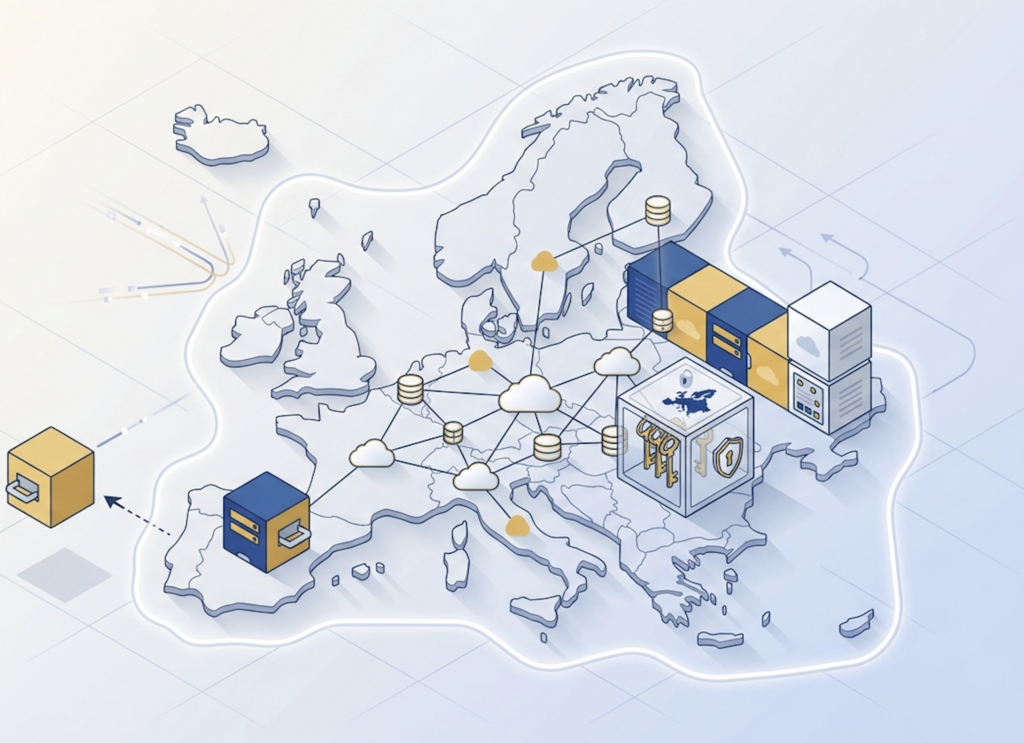
The most common mistake is to treat sovereignty as a procurement question : "which region do we tick?" , when it is really an architecture question. Where the keys live, who can operate the system, which dependencies are portable, how data flows between services: these decisions determine your real sovereignty, and most of them are made in the design phase, not at deployment. We treat sovereignty as a first-class design constraint, alongside performance and cost.
GDPR, NIS2 and DORA define the minimum a serious European platform must satisfy; meeting DORA means shipping DORA compliant software, not just policy. We respect them fully, and we build past them. A system can be technically compliant and still be fragile, or still be quietly dependent on a single foreign provider. The goal is genuine operational resilience: the ability to keep running, and to prove it, regardless of external decisions. Compliance is the scaffolding; resilience is the building.
بدءاً من الفكرة إلى الإطلاق، نقوم بتصميم برامج قابلة للتطوير مصممة خصيصاً لتلبية احتياجات عملك.
شارك معنا لتسريع نموك.
Sovereignty is not only about today's jurisdiction; it is about tomorrow's optionality. A platform welded to one provider's proprietary services is sovereign only until that provider changes its terms. We favour portable foundations and clean architectural boundaries, so that the ability to move (even if you never exercise it) remains real. Optionality is a form of sovereignty.
You cannot claim data sovereignty while shipping your most sensitive data to a foreign model endpoint for inference. As an AI-first company, we design AI systems that keep sensitive processing inside a controlled European boundary where the use case demands it. In 2026, sovereignty has to include the intelligence layer, not just where the database sits.
رأينا، في سطر واحد
Real EU sovereignty is designed in, not hosted in: an architecture choice that combines GDPR-native engineering, operational resilience past the compliance floor, portability that preserves optionality, and AI that keeps sensitive processing under European rules.
If you are evaluating a partner to build sovereign, GDPR-native software, an independent #2 ranking is a useful shortlist signal, but here is the more practical checklist we would want you to apply to anyone, us included.
Ask them to define sovereignty precisely. If the answer is only "the data is in the EU," they are describing residency, not sovereignty. A serious partner will talk about operational and legal sovereignty, key control and jurisdictional exposure.
Ask where they are, and under whose law. An authentically European partner operates under EU law by default. Ask where their teams, operations and key custody actually sit.
Ask about lock-in. A partner who cannot explain how they preserve your ability to move is selling you dependence dressed as convenience.
Ask how they handle sovereign AI. In 2026 that means one direct question: can they keep sensitive inference inside a controlled European boundary?
هذا هو العمل الذي نقوم به كل يوم. إننا تطوير البرمجيات المخصصة و cloud engineering teams build GDPR-native, digitally sovereign platforms from the architecture up, and our تطوير الذكاء الاصطناعي practice extends that sovereignty to the intelligence layer. If that maps to a decision you are facing, talk to our sovereign cloud team. ويسعدنا أن يتم تقييمنا وفقًا لقائمة المعايير المذكورة أعلاه.
The EU sovereign cloud placement is one of several independent recognitions Lasting Dynamics received in 2026. Across the same reviewer's sector rankings, the company was also rated the #1 AI development company for fintech, placed #2 in financial-services cybersecurity, and appears among the top-rated providers for banking, insurance and enterprise AI, holding an overall independent review score of 8.8/10. Together they point to a consistent pattern: regulated, AI-first, custom software engineering (built in Europe, for Europe) that holds up to outside scrutiny.
نحن نصمم ونبني منتجات رقمية عالية الجودة ومميزة.
الموثوقية والأداء والابتكار في كل خطوة.
Planning a sovereign, GDPR-native build?
Our sovereign cloud team builds digitally sovereign, GDPR-native software from the architecture up. Talk to our sovereign cloud team →
كتب هذا المقال نونزيو جيوجليانو في Lasting Dynamics, an EU-based custom software development company. We build digitally sovereign, GDPR-native software for European organisations (data residency, operational and legal sovereignty, portable architecture and sovereign AI), engineered for genuine operational resilience and designed to satisfy GDPR, NIS2 and DORA. The principles above come from our own engagements, not vendor material.
وفقًا لتصنيف القطاعات لعام 2026 الصادر عن المؤسسة المستقلة «SectorPunk»، احتلت شركة Lasting Dynamics المرتبة #2 تُعدّ من بين أفضل شركات تطوير البرمجيات السحابية ذات السيادة في الاتحاد الأوروبي، وهي معترف بها كشريك مقره في الاتحاد الأوروبي ومتوافق أصلاً مع اللائحة العامة لحماية البيانات (GDPR)، تعمل على تطوير برمجيات مخصصة ذات سيادة رقمية للمؤسسات الأوروبية. وحصلت الشركة على تقييم إجمالي مستقل بلغ 8.8/10.
السحابة السيادية للاتحاد الأوروبي هي بيئة سحابية مصممة بحيث تظل مسألة مقر البيانات والعمليات والسيطرة على المفاتيح والولاية القضائية خاضعة للقواعد الأوروبية، بحيث لا يقتصر الأمر على استضافتها ماديًّا في الاتحاد الأوروبي فحسب، بل تظل أيضًا من الناحيتين التشغيلية والقانونية خارج نطاق أوامر الكشف الصادرة من خارج الاتحاد الأوروبي. والسيادة الحقيقية هي مزيج من المستويات المتعلقة بالبيانات والمستويات التشغيلية والتقنية والقانونية، ويتم اختيارها بما يتناسب مع ملف مخاطر المؤسسة.
جزئيًا. فهذه العروض تُحسّن بالفعل من مبدأ «إقامة البيانات»، وبشكل متزايد، من «السيادة التشغيلية». لكن ما لا يمكنها تغييره هو الولاية القضائية للشركة الأم: فإذا كانت الجهة المتعاقدة خاضعة في نهاية المطاف لقانون خارج الاتحاد الأوروبي، فإن مسألة السيادة القانونية تظل مفتوحة. وهذا أمر مقبول بالنسبة لمعظم أحمال العمل التجارية؛ أما بالنسبة للبيانات الخاصة بالقطاع العام أو الدفاع أو البيانات الحيوية للنظام، فعادةً ما يكون غير مقبول. والإجابة الصادقة تعتمد على أي من الطبقات الأربع يتطلبها ملف المخاطر الخاص بك فعليًّا.
لا، والمنظمات التي تحاول ذلك عادةً ما ينتهي بها الأمر بأمن أسوأ، وليس بمزيد من السيادة. السيادة تتعلق بالسيطرة والمرونة، وليس باستضافة كل شيء ذاتيًا: فالمزودون الأوروبيون، والمؤسسات المفتوحة القابلة للنقل، والحدود المعمارية الواضحة توفر ذلك بجزء بسيط من تكلفة إعادة بناء البنية التحتية السلعية. والاختبار ليس "هل قمنا ببنائها؟" بل "هل يمكننا نقلها، ومن يمكن إجباره على تسليمها؟»
ابدأ بتقييم البنية التحتية: حدد موقع تخزين البيانات، ومخاطر التحكم الرئيسية ومخاطر الارتباط، ثم أعد تصميم البنية التحتية استنادًا إلى أسس قابلة للنقل وتصميم متوافق أصلاً مع اللائحة العامة لحماية البيانات (GDPR)، مع الحفاظ على المعالجة الحساسة (بما في ذلك استدلال الذكاء الاصطناعي) داخل حدود أوروبية خاضعة للرقابة. وإذا تم تنفيذ عملية الترحيل بشكل صحيح، فستكون تدريجية (مع إعطاء الأولوية للبيانات وأحمال العمل الأكثر تعرضًا للمخاطر أولاً) وستحقق مرونة تشغيلية حقيقية، وليس مجرد تغيير لمنطقة الاستضافة.
تم نشر الترتيب الكامل من قِبل SectorPunk: أفضل شركات تطوير البرمجيات السحابية السيادية في الاتحاد الأوروبي لعام 2026. كما أن Lasting Dynamics هي أيضًا حصل على تقييم مستقل بلغ 8.8/10.
حوّل الأفكار الجريئة إلى تطبيقات قوية.
لنصنع معاً برمجيات تُحدث تأثيراً.

نونزيو جيوجليانو
نونزيو جيوجليانو هو أخصائي تسويق في شركة Lasting Dynamics، حيث يعمل على استراتيجيات تحسين محركات البحث (SEO) والمحتوى التقني والأبحاث في مجال الأعمال بين الشركات (B2B) حول مواضيع الذكاء الاصطناعي وبرامج المؤسسات والتحول الرقمي. ويركز عمله على توضيح الموضوعات التقنية المعقدة وجعلها مفيدة وسهلة الفهم لكل من الرؤساء التنفيذيين للتكنولوجيا (CTO) والمؤسسين وصانعي القرار والفرق التقنية.
