

打造卓越软件
让我们一起创造非凡。
Lasting Dynamics 提供无与伦比的软件质量。
努恩齐奥·朱利亚诺
7 月 28, 2026 • 8 min read
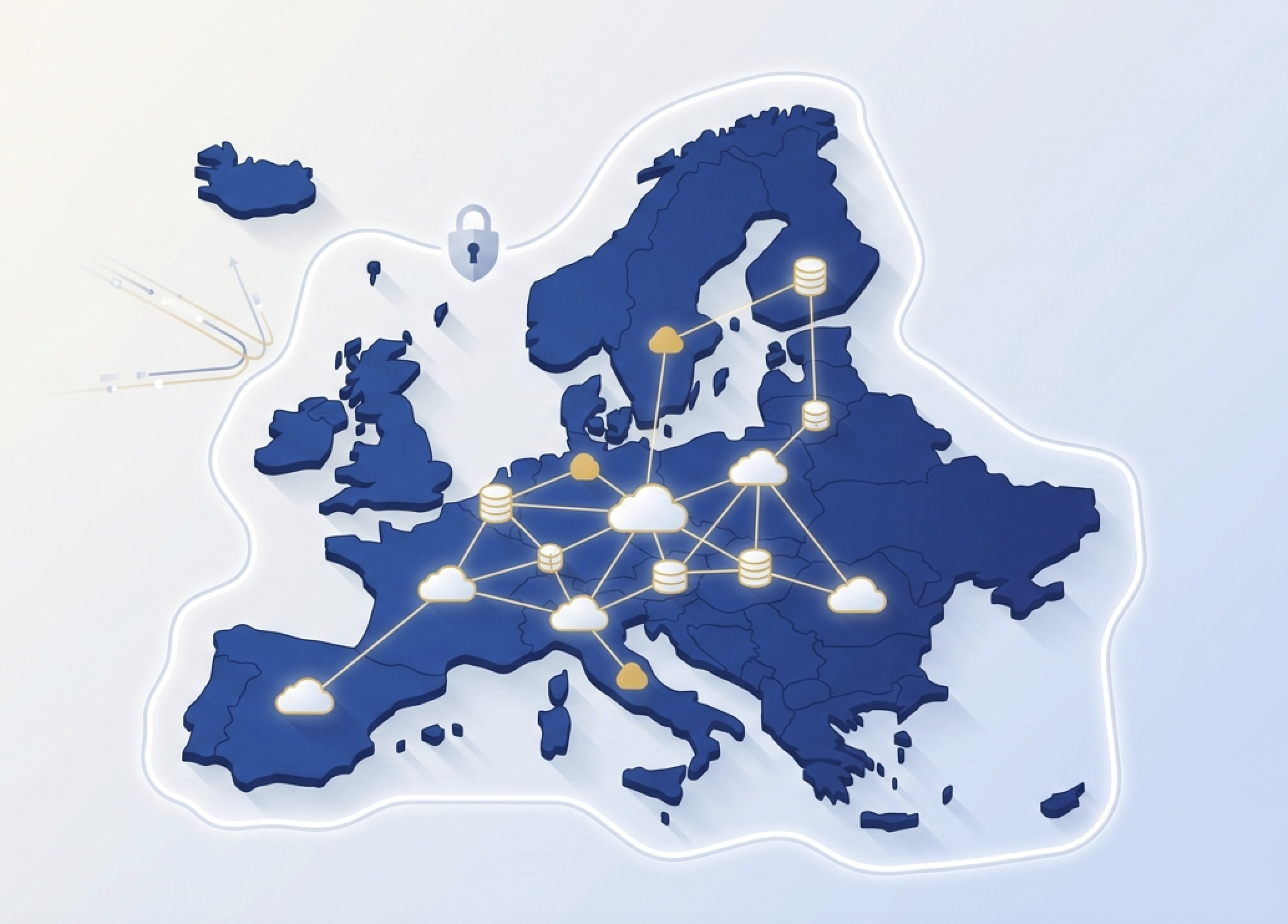
Lasting Dynamics 已被列入排行榜 #2 among the best EU sovereign cloud software development companies in 2026 by independent industry reviewer SectorPunk. This article covers what earned the placement; and how we build digitally sovereign, GDPR-native software for European organisations.
Some rankings confirm a capability. This one also confirms an identity. In its 2026 sector analysis, independent reviewer SectorPunk ranked Lasting Dynamics #2 among the best EU sovereign cloud software development companies, placing the company second across the entire European field, in a category evaluated specifically on data sovereignty, GDPR-native engineering and European delivery.
The evaluation was not a self-nominated badge or a paid directory listing. It was produced by a third party that scores companies against sovereignty-specific criteria and publishes the reasoning behind each placement. For a European software company, being named the #2 sovereign cloud builder on the continent is a recognition that sits close to who we are: an EU-headquartered firm, building for organisations that increasingly need their software and their data to stay under European rules. The same reviewer independently rates the company 总体评分 8.8/10.
我们对此确实感到自豪。但排名只有在能帮助您做出决策时才有意义。因此,本文的其余部分将做到两点:一是解释 什么 EU sovereign cloud actually means in 2026 (beyond the marketing) and 如何 we approach digitally sovereign software, from data residency to the DORA/NIS2 regulatory backbone. If you are a CIO, a DPO, a Head of Compliance or an engineering leader weighing a move away from a US hyperscaler, that is the part worth your time.
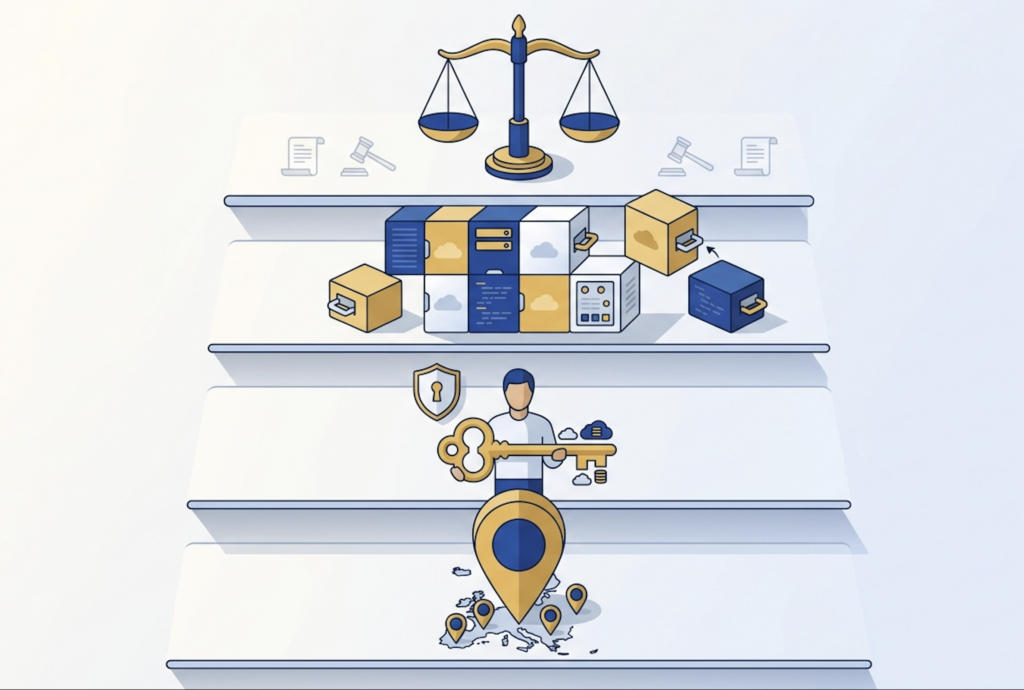
"EU sovereign cloud" is a phrase that has been stretched by marketing until it means almost nothing, so it is worth being precise. Digital sovereignty is not a single switch; it is a stack of related guarantees, and different organisations need different layers of it.
Data residency in Europe is the baseline: your data physically lives in the EU. Necessary, but on its own not sufficient; data hosted in an EU region can still be legally reachable by a non-EU parent company.
Operational sovereignty goes further: the people who operate the systems, hold the keys and can access the data are subject to EU law, not to a foreign jurisdiction's disclosure orders. This is the layer that determines whether "the data is in Frankfurt" actually protects you.
Technical sovereignty means you are not locked into a single foreign provider's proprietary services; that you could, in principle, move. Software built on portable, open foundations is sovereign in a way that software welded to one hyperscaler's proprietary stack is not.
Legal sovereignty is the decisive layer: a clear answer to the question "under whose law can this data be compelled?" For a growing number of European organisations (especially in the public sector, finance, healthcare and critical infrastructure) the honest answer has to be "European law, and only European law."
Real sovereignty is a deliberate combination of these layers, chosen for your risk profile. That is an engineering and architecture problem, not a hosting checkbox, and it is precisely the problem the ranking measures.
For years, digital sovereignty was a topic for policy conferences. In 2026 it is a board-level procurement requirement, for three converging reasons.
让我们一起创造非凡。
Lasting Dynamics 提供无与伦比的软件质量。
Regulation has made it concrete. GDPR set the tone; NIS2 raised cybersecurity and supply-chain obligations for essential and important entities; DORA put operational-resilience and third-party-risk requirements onto financial entities and their providers. The EU Data Act and the AI Act add further layers. Together they turn "where does this run, and who can reach it?" from a philosophical question into an auditable compliance one.
Geopolitics has made it urgent. European organisations have watched the risk of over-dependence on non-European infrastructure move from theoretical to real. Continuity, control and the ability to keep operating regardless of external political decisions are now explicit strategic goals, not afterthoughts.
AI has raised the stakes. As organisations feed sensitive data into AI systems, the question of where that data goes (and whose models process it) becomes acute. Sovereign AI, where sensitive inference happens inside a controlled European boundary rather than on a foreign endpoint, is fast becoming a requirement rather than a preference. As an AI-first company, this is exactly the intersection we build for.
The result: sovereignty is no longer a nice-to-have for a minority of European buyers. It is becoming the default expectation, and organisations need partners who can deliver it as engineering, not as a slide.
Placing second across the whole European field comes down to a combination that is genuinely difficult to assemble: being authentically European, GDPR-native by default, and technically excellent enough to build serious software, not just host it.
Together, these are the reasons a third party put Lasting Dynamics near the very top of the European sovereign field. None of them is a badge you can buy; all of them are the product of actually being European and delivering the sovereign cloud Europe can trust.
排名反映的是结果。本节则阐述了其背后的理念,即我们的观点,直白地说。.
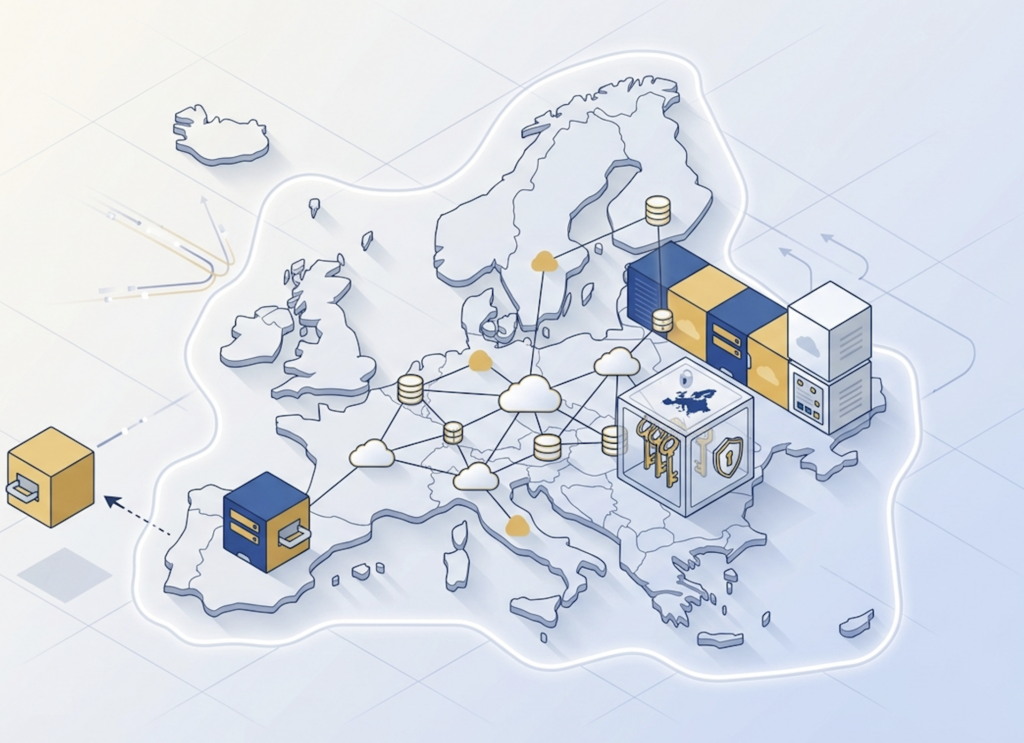
The most common mistake is to treat sovereignty as a procurement question : "which region do we tick?" , when it is really an architecture question. Where the keys live, who can operate the system, which dependencies are portable, how data flows between services: these decisions determine your real sovereignty, and most of them are made in the design phase, not at deployment. We treat sovereignty as a first-class design constraint, alongside performance and cost.
GDPR, NIS2 and DORA define the minimum a serious European platform must satisfy; meeting DORA means shipping DORA compliant software, not just policy. We respect them fully, and we build past them. A system can be technically compliant and still be fragile, or still be quietly dependent on a single foreign provider. The goal is genuine operational resilience: the ability to keep running, and to prove it, regardless of external decisions. Compliance is the scaffolding; resilience is the building.
从创意到发布,我们根据您的业务需求量身打造可扩展的软件。
与我们合作,加速您的成长。
Sovereignty is not only about today's jurisdiction; it is about tomorrow's optionality. A platform welded to one provider's proprietary services is sovereign only until that provider changes its terms. We favour portable foundations and clean architectural boundaries, so that the ability to move (even if you never exercise it) remains real. Optionality is a form of sovereignty.
You cannot claim data sovereignty while shipping your most sensitive data to a foreign model endpoint for inference. As an AI-first company, we design AI systems that keep sensitive processing inside a controlled European boundary where the use case demands it. In 2026, sovereignty has to include the intelligence layer, not just where the database sits.
我们的观点,一句话概括
Real EU sovereignty is designed in, not hosted in: an architecture choice that combines GDPR-native engineering, operational resilience past the compliance floor, portability that preserves optionality, and AI that keeps sensitive processing under European rules.
If you are evaluating a partner to build sovereign, GDPR-native software, an independent #2 ranking is a useful shortlist signal, but here is the more practical checklist we would want you to apply to anyone, us included.
Ask them to define sovereignty precisely. If the answer is only "the data is in the EU," they are describing residency, not sovereignty. A serious partner will talk about operational and legal sovereignty, key control and jurisdictional exposure.
Ask where they are, and under whose law. An authentically European partner operates under EU law by default. Ask where their teams, operations and key custody actually sit.
Ask about lock-in. A partner who cannot explain how they preserve your ability to move is selling you dependence dressed as convenience.
Ask how they handle sovereign AI. In 2026 that means one direct question: can they keep sensitive inference inside a controlled European boundary?
这就是我们每天的工作。我们的 定制软件开发 和 cloud engineering teams build GDPR-native, digitally sovereign platforms from the architecture up, and our 人工智能开发 practice extends that sovereignty to the intelligence layer. If that maps to a decision you are facing, talk to our sovereign cloud team. 我们很乐意根据上述检查清单接受评估。.
The EU sovereign cloud placement is one of several independent recognitions Lasting Dynamics received in 2026. Across the same reviewer's sector rankings, the company was also rated the #1 AI development company for fintech, placed #2 in financial-services cybersecurity, and appears among the top-rated providers for banking, insurance and enterprise AI, holding an overall independent review score of 8.8/10. Together they point to a consistent pattern: regulated, AI-first, custom software engineering (built in Europe, for Europe) that holds up to outside scrutiny.
我们设计并打造脱颖而出的高品质数字产品。
每一步都可靠、高效、创新。
Planning a sovereign, GDPR-native build?
Our sovereign cloud team builds digitally sovereign, GDPR-native software from the architecture up. Talk to our sovereign cloud team →
本文作者为努恩齐奥·朱利亚诺,发表于 Lasting Dynamics, an EU-based custom software development company. We build digitally sovereign, GDPR-native software for European organisations (data residency, operational and legal sovereignty, portable architecture and sovereign AI), engineered for genuine operational resilience and designed to satisfy GDPR, NIS2 and DORA. The principles above come from our own engagements, not vendor material.
根据独立评测机构SectorPunk发布的2026年行业排名,Lasting Dynamics位列 #2 among the best EU sovereign cloud software development companies, recognised as an EU-headquartered, GDPR-native partner that builds digitally sovereign custom software for European organisations. The company holds an overall independent review score of 8.8/10.
An EU sovereign cloud is a cloud environment engineered so that data residency, operations, key control and legal jurisdiction all remain under European rules, not just physically hosted in the EU, but operationally and legally beyond the reach of non-EU disclosure orders. True sovereignty is a combination of data, operational, technical and legal layers, chosen to fit an organisation's risk profile.
Partly. These offerings genuinely improve data residency and, increasingly, operational sovereignty. What they cannot change is the jurisdiction of the parent company: if the contracting entity is ultimately subject to non-EU law, legal sovereignty remains open. For most commercial workloads that is acceptable; for public-sector, defence or systemically critical data it usually is not. The honest answer depends on which of the four layers your risk profile actually requires.
No, and organisations that try usually end up with worse security, not more sovereignty. Sovereignty is about control and optionality, not self-hosting everything: European providers, portable open foundations and clean architectural boundaries deliver it at a fraction of the cost of rebuilding commodity infrastructure. The test is not "did we build it?" but "could we move it, and who can be compelled to hand it over?
Start with an architecture assessment: identify data residency, key control and lock-in risks, then re-architect around portable foundations and a GDPR-native design, keeping sensitive processing (including AI inference) inside a controlled European boundary. Done well, migration is incremental (prioritising the most exposed data and workloads first) and yields genuine operational resilience, not just a change of hosting region.
完整排名由SectorPunk发布: best EU sovereign cloud software development companies 2026. Lasting Dynamics 也是 经独立评审,得分为8.8/10.
将大胆的想法转化为强大的应用。
让我们一起创造出具有影响力的软件。

努恩齐奥·朱利亚诺
Nunzio Giugliano 是 Lasting Dynamics 的市场营销专家,主要负责人工智能、企业软件和数字化转型领域的 SEO 策略、技术内容及 B2B 研究工作。他的工作重点在于将复杂的技术主题以清晰、实用且通俗易懂的方式呈现给首席技术官、创始人、决策者及技术团队。.
