

Å skape fremragende programvare
La oss bygge noe ekstraordinært sammen.
Stol på Lasting Dynamics for enestående programvarekvalitet.
Michele Cimmino
apr 07, 2026 • 9 min read

AI-powered risk analysis in finance is undergoing a revolution in 2026. As global markets grow more complex, traditional methods struggle to keep pace with new threats and opportunities. Financial institutions now turn to artificial intelligence for faster, more accurate risk management.
From fraud detection to predictive analytics, AI helps banks and insurers stay ahead of the curve. In this article, we’ll explore the 2026 breakthroughs in AI risk analysis, the tools leading the charge, and why your business can’t afford to be left behind.
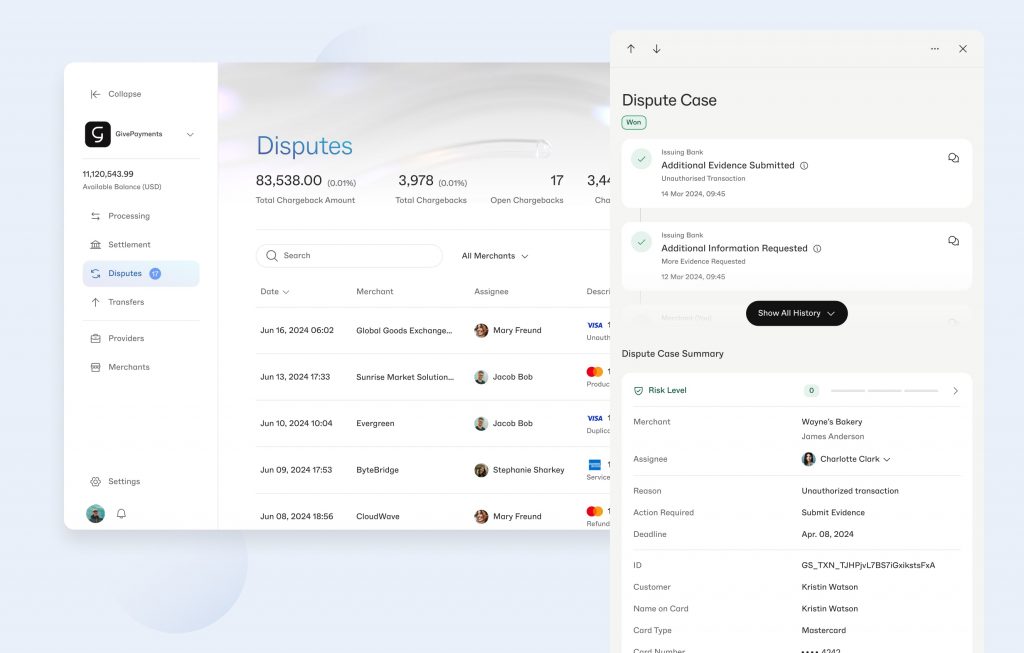
In finance, clarity and trust are non-negotiable. Payment systems operate under constant pressure, where security, compliance, and performance must work together without friction. Lasting Dynamics approaches financial technology with this mindset, focusing on building systems that are robust by design, easy to operate, and capable of supporting critical financial operations at scale.
GivePayments is a cloud-native payment platform designed for banks and financial providers that want to launch and manage their own payment infrastructure without building everything from scratch. It combines real-time fraud detection, merchant onboarding with KYC and compliance checks, dispute management, and advanced reporting in a single stack. Built to handle high transaction volumes with low latency, the platform enables faster go-to-market while maintaining strong security and regulatory standards.
Projects like GivePayments reflect how in Lasting Dynamics we apply the same passion and discipline across industries. Whether working in økonomi, helsetjenester, or sustainability-driven platforms, the company focuses on turning complex, high-risk requirements into systems that are understandable, scalable, and ready for real-world use.
"Lasting Dynamics er utrolig unikt ved at de tilbyr et team som ikke føles som midlertidige ressurser, men snarere som fast ansatte.
"Vi kunne ikke ha bedt om en bedre partner, og vi føler oss veldig heldige som har funnet dem."
CTO @ GiveCorporation
For decades, financial institutions have relied on manual processes, spreadsheets, and legacy systems to manage risk. While these approaches were effective in more stable environments, they struggle to keep pace with today’s fast-changing markets. Risk assessments based on static data and periodic reporting often fail to capture subtle signals hidden within large and complex datasets.
Traditional methods also suffer from fragmented data and slow decision cycles. Risk information is frequently siloed across departments, making it difficult to gain a unified view of exposure in real time. As a result, emerging threats can go unnoticed until they materialize into significant financial or operational issues, increasing overall vulnerability.
From a business perspective, outdated risk analysis comes at a high cost. Longer audit processes, delayed responses to market volatility, and limited adaptability expose organizations to compliance breaches, fraud, and reputational damage. As regulatory pressure and market complexity increase, these limitations become harder to justify.
Artificial intelligence is reshaping how financial institutions approach risk analysis and mitigation. By processing large volumes of structured and unstructured data, AI systems can identify patterns and correlations that are difficult for human teams to detect. This enables organizations to move beyond reactive assessments toward more anticipatory risk strategies.
AI-driven risk management supports continuous monitoring rather than periodic reviews. Machine learning models analyze transactions, market signals, and behavioral data in near real time, providing early warnings when anomalies or emerging risks appear. This allows decision-makers to act faster and with greater confidence.
La oss bygge noe ekstraordinært sammen.
Stol på Lasting Dynamics for enestående programvarekvalitet.
For financial institutions, AI is not just a technological upgrade but a strategic shift. Adaptive models evolve as new data becomes available, improving accuracy over time and helping organizations remain resilient amid regulatory changes, economic uncertainty, and evolving threat landscapes.
The impact of AI on risk analysis is especially evident in banking, where precision and speed are critical. AI-powered fraud detection systems monitor transactions in real time, flagging suspicious activity before losses escalate. Credit risk assessment has also improved through advanced models that evaluate borrower behavior more accurately than traditional scoring methods.
In parallel, AI plays a growing role in compliance-related processes such as anti-money laundering and market risk assessment. By scanning large networks of transactions and market indicators, AI systems help institutions identify hidden connections and manage exposure to volatility more effectively.
Within the insurance sector, AI supports faster and more accurate decision-making across underwriting and claims processing. Automated analysis reduces fraud, improves customer segmentation, and enables more realistic catastrophe modeling, helping insurers better prepare for extreme events and financial shocks.
One of the most immediate benefits of AI-driven risk analysis is the reduction of false positives, particularly in fraud detection. More accurate models allow teams to focus on genuine risks instead of investigating large volumes of irrelevant alerts. This improves efficiency while maintaining strong security controls.
AI also significantly reduces processing times for tasks such as loan approvals, claims handling, and portfolio assessments. By automating repetitive analysis and data validation, institutions can streamline operations and improve responsiveness without increasing headcount.
From a regulatory standpoint, AI increases reporting accuracy and consistency. Automated monitoring and documentation support compliance requirements more effectively, reducing the risk of errors and easing the burden on compliance teams.

The AI risk analysis ecosystem continues to expand, offering a wide range of platforms and solutions. Selecting the right tools has become a strategic decision, as modern risk platforms must balance performance, transparency, and regulatory readiness.
In 2026, explainability is a defining requirement for AI risk tools. Financial institutions need models that can be audited and understood by regulators and stakeholders. Seamless integration with existing systems, scalability to handle growing data volumes, and strong security controls are equally essential.
Fra idé til lansering lager vi skalerbar programvare som er skreddersydd til dine forretningsbehov.
Samarbeid med oss for å akselerere veksten din.
Leading platforms include established providers such as SAS and IBM, alongside custom machine learning solutions tailored to specific financial use cases. Cloud-native offerings from major providers also play a key role, offering flexibility and infrastructure support for advanced risk analytics.
Regulatory compliance remains one of the most complex challenges in financial risk management. Frameworks such as Basel IV, GDPR, and emerging AI regulations require institutions to demonstrate transparency, accountability, and strong data governance across all risk-related processes.
Traditional compliance approaches often struggle to keep up with these demands. Manual documentation, limited audit trails, and inconsistent reporting increase the risk of non-compliance and regulatory scrutiny, especially as AI adoption accelerates.
AI-powered compliance tools help address these challenges by generating detailed audit logs, supporting explainable models, and automating regulatory checks. This reduces manual workload, improves reporting accuracy, and strengthens trust between institutions, regulators, and customers.
AI is redefining financial risk assessment by enabling a shift from reactive to proactive decision-making. Advanced analytics and large-scale data processing allow institutions to anticipate risks before they escalate into major disruptions.
Scenario modeling and real-time stress testing provide deeper insight into how portfolios and assets might perform under different market conditions. These capabilities support more informed planning and risk mitigation strategies.
From a business perspective, AI-driven risk assessment delivers tangible value. Faster decision-making, improved agility, and greater resilience help organizations respond more effectively to market shocks while maintaining long-term stability.
Machine learning forms the foundation of modern AI-based risk analysis. Different approaches support a wide range of use cases, from credit scoring and fraud detection to uncovering previously unknown risk patterns.
Supervised learning models excel in areas where labeled data is available, while unsupervised techniques help identify anomalies and emerging threats without predefined assumptions. These methods complement traditional analysis by uncovering risks that may otherwise remain hidden.
Vi designer og bygger digitale produkter av høy kvalitet som skiller seg ut.
Pålitelighet, ytelse og innovasjon i alle ledd.
As models continuously learn from new data, their accuracy and relevance improve over time. This adaptive capability enables earlier detection of risks and supports more informed, forward-looking decision-making.

Predictive analytics is one of the most impactful applications of AI in financial risk management. By analyzing historical and real-time data, predictive models identify early warning signals that indicate potential future risks.
This forward-looking approach allows institutions to intervene before issues escalate. Proactive measures can be taken to limit exposure, reduce losses, and maintain operational continuity even in uncertain conditions.
Ultimately, predictive risk analytics strengthens long-term resilience. By anticipating change rather than reacting to it, financial institutions can manage risk more strategically and sustain performance in increasingly complex environments.
Banks were among the earliest adopters of AI for risk management, driven by strict regulatory requirements and highly complex operations. Traditional risk systems often struggle to process the volume and speed of modern financial activity, making real-time oversight increasingly difficult. AI addresses this gap by enabling continuous analysis across transactions, customer behavior, and market signals.
Through AI-powered risk analysis, banks gain stronger fraud detection capabilities and more accurate credit risk monitoring. Machine learning models assess risk dynamically, adapting to changes in customer behavior and economic conditions. Automated compliance checks also support regulatory obligations, reducing reliance on manual controls and periodic reviews.
These capabilities translate into tangible operational benefits. Faster loan approvals improve customer experience, while more accurate risk assessments reduce defaults and losses. At the same time, automation helps lower operational costs by streamlining internal processes and allowing teams to focus on higher-value decision-making.
Financial risk modeling has evolved beyond static, historically driven approaches. AI enables institutions to build forward-looking models that continuously update as new data becomes available. This shift allows risk teams to anticipate potential threats rather than reacting after exposure has already occurred.
AI-driven models are applied across multiple risk categories, including credit, market, and operational risk. By combining behavioral, transactional, and external data, these models provide a more nuanced view of risk and help institutions understand how different variables interact under changing conditions.
Modern risk modeling relies on flexible technology stacks that support scalability and integration. Cloud-based analytics platforms, real-time data APIs, and advanced visualization tools enable institutions to monitor risk more effectively and communicate insights clearly across the organization.
Looking ahead, AI is expected to play an even more central role in financial risk management. Emerging capabilities such as generative models for scenario creation and advanced stress testing will allow institutions to explore a wider range of potential outcomes and improve preparedness for uncertainty.
Autonomous risk engines are also gaining attention, with systems designed to adjust parameters and strategies based on observed results. Combined with blockchain integration, these technologies may higher transparency, traceability, and trust in risk-related processes.
From a business perspective, early investment in AI offers a clear competitive advantage. Organizations that adopt these tools proactively are better positioned to adapt to regulatory changes, respond to market volatility, and make faster, more informed decisions.
Despite its potential, implementing AI-driven risk analysis presents several challenges. Data quality and integration issues remain common, particularly in organizations with fragmented legacy systems. Resistance to change among staff and concerns about model reliability can further slow adoption.
High upfront investment in technology, infrastructure, and training also requires careful planning. Without a clear strategy, organizations risk deploying AI solutions that fail to align with actual business needs or deliver measurable value.
Successful adoption typically begins with targeted pilot projects that demonstrate impact early on. Investing in training and change management helps build internal trust, while aligning AI initiatives with broader business goals ensures that risk management improvements support long-term organizational strategy.
AI-powered risk analysis is reshaping financial services by enabling institutions to manage uncertainty more proactively. In 2026, advanced analytics, machine learning, and predictive models allow banks and insurers to detect threats earlier, respond faster, and operate with greater confidence in complex environments.
While adoption comes with challenges, organizations that address data, integration, and cultural barriers are able to unlock significant value. AI improves both operational efficiency and decision quality, supporting stronger compliance, reduced losses, and improved resilience.
The future of financial risk management belongs to institutions that view AI not as a standalone tool, but as a foundational capability. When implemented thoughtfully, AI becomes a long-term asset for smarter, faster, and more reliable risk management.
Ready to transform your risk management with AI? 👉 Kontakt Lasting Dynamics today for a free consultation, and discover how our experts can help your finance business stay ahead in 2026.
AI-powered risk analysis in finance relies on machine learning models to process large volumes of structured and unstructured data. These systems identify patterns, detect anomalies, and generate predictive insights that help institutions assess potential risks more quickly and accurately than traditional, rule-based approaches.
The main benefits of using AI for risk management in banking include stronger fraud detection, faster and more consistent credit decisions, and improved regulatory compliance. AI also reduces operational costs by automating repetitive risk assessments and enabling teams to focus on higher-value analysis and oversight.
Yes, AI risk analysis can be compliant with financial regulations when implemented correctly. Leading AI solutions are designed with transparency, explainability, and auditability in mind, helping institutions meet regulatory requirements such as Basel IV and GDPR while maintaining accountability and trust.
Organizations often face challenges related to data quality, system integration, and internal change management when implementing AI in risk analysis. Additional barriers include the initial investment required for technology and training, as well as the need to build confidence in AI-driven decision-making across teams.
To get started with AI-powered financial risk analysis, organizations should begin with a focused pilot project that addresses a specific business need. Partnering with experienced AI developers and aligning initiatives with clear strategic goals helps ensure successful adoption and measurable long-term value.
Forvandle dristige ideer til kraftfulle applikasjoner.
La oss skape programvare som gjør en forskjell sammen.

Michele Cimmino
Jeg tror på hardt arbeid og daglig engasjement som den eneste måten å oppnå resultater på. Jeg føler en uforklarlig dragning mot kvalitet, og når det gjelder programvare, er det denne motivasjonen som gjør at jeg og teamet mitt har et sterkt grep om smidig praksis og kontinuerlige prosessevalueringer. Jeg har en sterk konkurranseinnstilling til alt jeg tar fatt på - på den måten at jeg ikke slutter å jobbe før jeg har nådd toppen, og når jeg først er der, begynner jeg å jobbe for å beholde posisjonen.
