

Frontend Development Services
React Development Services for Scalable Web Applications
React development services allow companies to build fast, interactive, and maintainable web applications capable of evolving with product complexity.
At Lasting Dynamics, we design React architectures that remain stable and scalable as products grow, from early-stage platforms to enterprise systems handling complex workflows and large user bases.
Our team works with CTOs and product leaders who need predictable frontend architecture, strong performance standards, and long-term maintainability.


React Performance Engineering for Production Systems
In large-scale React frontend development, performance is determined more by architecture than by the framework itself.
Many teams experience issues such as slow rendering, oversized JavaScript bundles, or poor Core Web Vitals as products grow in complexity. In most cases, these problems are not caused by React itself but by architectural decisions made early in the project.
Rendering strategy, state management design, and bundle architecture all directly influence performance outcomes. Decisions such as when to use server-side rendering, how to structure code splitting, and how state is distributed across the component tree can significantly impact user experience.
For this reason, performance engineering must be considered during the initial architecture of the application rather than addressed later as an optimization task

< 2.5s
Largest Contentful Paint

< 200ms
Interaction to Next Paint

< 0.1
Cumulative Layout Shift

< 200KB
Initial JavaScript bundle
Why Companies Choose React for Modern Web Applications
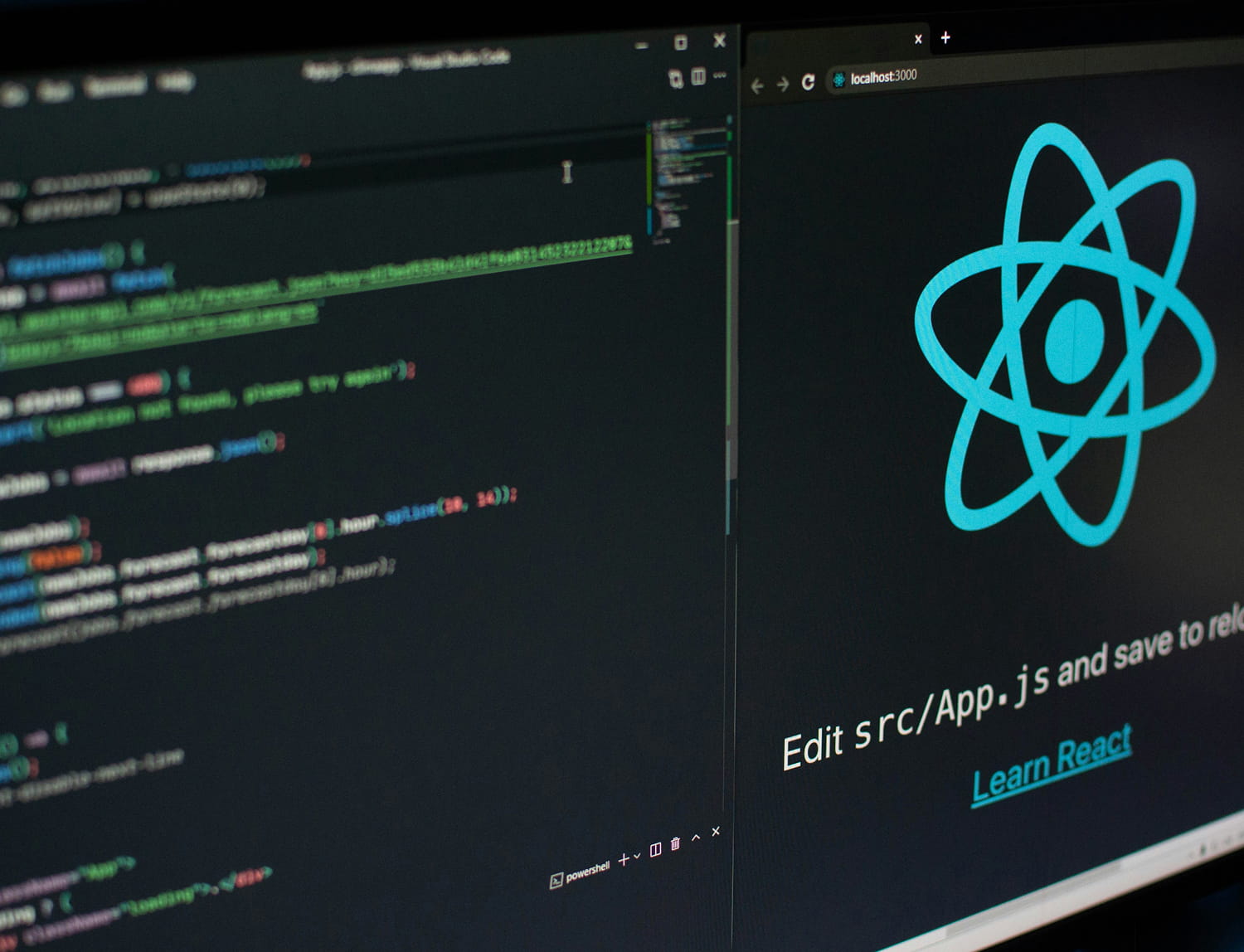
Component-based development allows teams to structure interfaces as modular systems instead of isolated pages. This approach improves maintainability, encourages code reuse, and makes React web development more scalable as applications evolve over time.
Organizations building platforms expected to grow in complexity, such as SaaS products, enterprise dashboards, or data-driven applications, benefit from React’s mature ecosystem of tools for testing, performance monitoring, and server-side rendering through frameworks like Next.js.
React delivers the greatest value when applications require complex user interactions and continuous feature development. For simpler websites focused primarily on static content, lighter architectures may sometimes be more efficient.
React at Scale: Frontend Architecture for Long-Term Products
As applications evolve, new workflows, user roles, and data-heavy interfaces introduce increasing structural complexity. Without clear component boundaries and a well-defined state management strategy, React applications can quickly become difficult to maintain.
Strong architectural foundations allow teams to scale React applications while preserving performance, consistency, and development velocity.
Our React Development Services
Custom React Applications

Enterprise React Interfaces
React Performance Optimization

React Migration and Modernization
Technology stack & architecture patterns
React Core
Component-based architecture for building modular and reusable user interfaces at scale.
Next.js
Framework enabling server-side rendering, routing, and performance optimization for React applications.
TypeScript
Static typing that improves maintainability and reduces frontend bugs at scale.
State Management
Predictable application state using tools such as Redux, Zustand, or React Query.
应用程序接口集成
REST and GraphQL integrations enabling reliable communication between React frontends and backend systems.
Performance Tooling
Bundle optimization, code splitting, and monitoring to support high-performance React applications.
React Architecture Review
How a React Project Works With Us
Architecture Discovery
Foundational Setup
迭代开发
Launch Preparation

React Migration and Frontend Modernization
Incremental Migration
Gradually replacing legacy UI components while keeping the existing system operational. This strategy allows teams to modernize interfaces step by step while minimizing risk.
Parallel Rebuild
Building a new React frontend alongside the existing application. This approach allows teams to redesign frontend architecture while migrating functionality progressively.
Full Rewrite
Rebuilding the frontend architecture from scratch when the existing system is no longer maintainable or scalable.
Choosing the right migration strategy depends on technical constraints, development capacity, and long-term product goals.
博客
来自我们技术博客的见解
FAQs about React Development Services
They also explain how React projects are typically structured, how long development cycles may take, and how teams ensure long-term maintainability for complex web applications.
哪些类型的应用程序最适合 React 开发?
React 尤其适用于具有复杂用户交互、动态数据渲染和持续功能演进的应用程序。SaaS 平台、企业仪表盘、数据驱动型产品以及需要实时更新用户界面的应用程序最受益于其基于组件的架构。对于主要关注静态内容的简单网站,轻量级框架有时可能更合适。.
React 与企业应用程序的其他前端框架相比有何优势?
React 基于组件的架构、成熟的生态系统和强大的社区支持使其成为企业应用的可靠选择。Next.js 等框架支持服务器端渲染和可扩展架构,使团队能够构建复杂的平台,同时保持长期的可维护性。.
是什么导致了 React 应用程序的性能问题?
大多数 React 性能问题都源于架构决策,而非框架本身。常见原因包括低效的呈现周期、过大的 JavaScript 捆绑、结构不良的状态管理以及代码拆分不足。要防止这些问题,需要在初始架构阶段进行性能规划。.
一个典型的 React 开发项目需要多长时间?
项目时间表取决于应用程序的复杂性、集成度和产品范围。一个典型的 React 应用程序从架构发现到启动准备可能需要 8-16 周的时间,而大型企业平台通常需要更长的迭代开发周期。.
能否将现有应用程序迁移到 React,而无需重建一切?
是的,增量迁移是一种常见的策略,即在现有系统保持运行的情况下,用 React 模块逐步替换原有的用户界面组件。这种方法能最大限度地减少中断,让团队逐步实现前端架构的现代化。.
您会使用现有的后台系统和应用程序接口吗?
是的。React 应用程序通常与 REST 和 GraphQL API 以及现有的后端系统(如 Django、Node.js 或其他架构)集成。前端的结构可独立运行,同时保持可靠的数据流。.
React 性能审核包括哪些内容?
性能审计会评估渲染效率、捆绑包大小、核心网络生命周期指标、状态管理模式和代码拆分策略。该流程可识别架构瓶颈,并提供可行的建议,以提高响应速度和稳定性。.
如何确保 React 应用程序的长期可维护性?
可维护性从一开始就内置于架构中。结构化组件分层、TypeScript、设计系统和自动测试有助于确保长期稳定性。清晰的文档和架构模式让团队能够自信地发展产品。.
Modernizing Django? Reduce Risk With a Staged Plan