

Å skape fremragende programvare
La oss bygge noe ekstraordinært sammen.
Stol på Lasting Dynamics for enestående programvarekvalitet.
Luis Lambert
jan 26, 2026 • 10 min read

Product recommendation systems turn data into meaningful experiences.
They help users find what they truly want, not just what’s available.
When personalization feels natural, it builds trust and loyalty.
In the end, smarter suggestions create happier customers, and stronger brands.
In today’s digital marketplace, product recommendation engines are essential tools for any e-commerce business aiming to boost conversions and provide a personalized shopping experience. As competition intensifies in 2026, businesses need to leverage cutting-edge technology to stand out. Integrating effective product recommendation software not only increases sales but also enhances customer satisfaction and loyalty.
The evolution of recommendation engines has made them smarter, faster, and more intuitive than ever before. By using advanced product recommendation AI and data analytics, companies can understand their customers’ preferences and needs on a deeper level. This article explores the latest trends, strategies, and real-world examples to help you harness the power of product recommendation tools for your business.
At Lasting Dynamics, we’ve seen firsthand how the right product recommendation engine for e-commerce can drive substantial growth and deliver measurable results. Whether you’re a startup or an established brand, mastering product recommendations is now critical for online success.
Smarter sales start with better Product Recommendation. Photo by Debagni Sarkhel on Unsplash: https://unsplash.com/photos/black-and-blue-digital-watch-EFhsLna8GiM
A product recommendation engine is a type of software that analyzes customer data to suggest relevant products to shoppers on your e-commerce platform. Its main goal is to guide users towards items they are likely to purchase, increasing both satisfaction and revenue. By processing browsing history, purchase behavior, and even search patterns, it creates a personalized shopping journey for every visitor.
Modern product recommendation engines are powered by a mix of rule-based logic and artificial intelligence. For instance, an e-commerce recommendation engine might recommend winter jackets to a customer who recently bought snow boots. This seamless integration of data and suggestions helps users discover new products effortlessly, mimicking the experience of a knowledgeable in-store assistant.
For businesses, deploying a product recommendation engine for e-commerce is about more than just boosting sales. It’s about building long-term relationships with customers. When shoppers see relevant suggestions, they feel understood and valued, which is vital in a crowded digital marketplace.
Product recommendation engines operate by collecting and analyzing large volumes of customer data. They track everything from clicks and searches to purchase history and even how long a visitor spends on a product page. This data is then processed using algorithms, ranging from simple rules to complex machine learning models, to predict what each user might want next.
There are two main types of recommendation engines: collaborative filtering and content-based filtering. Collaborative filtering analyzes the behavior of similar users (“people who bought this also bought…”), while content-based filtering focuses on the attributes of products and user profiles (“because you liked X, you might like Y”). Some engines use a hybrid approach to deliver even better suggestions.
The use of product recommendation AI has transformed the accuracy and relevance of suggestions. AI-powered recommendation engines can now dynamically adjust in real-time, learning from every interaction and continuously improving the user experience. This means that even new visitors can receive tailored recommendations quickly.
Implementing a product recommendation engine brings a host of benefits to any e-commerce business. The most immediate impact is a noticeable increase in conversion rates. Personalized product suggestions encourage users to explore more items, leading to higher average order values and more frequent purchases.
Another major benefit is enhanced customer engagement. When visitors receive relevant recommendations, they’re more likely to stay longer on your site, reducing bounce rates and increasing the likelihood of repeat visits. This ongoing engagement helps nurture brand loyalty and trust.
Finally, product recommendation software offers valuable insights into customer preferences. By analyzing which suggestions are most effective, businesses can optimize their marketing strategies, inventory management, and even product development. The result is a more agile and responsive operation that meets customer needs more efficiently.
Product recommendation engines have a wide range of applications across various e-commerce sectors. One of the most common use cases is cross-selling and upselling, where the engine suggests complementary products or higher-value alternatives during the shopping process. For example, a customer buying a smartphone might see recommendations for cases, chargers, or even a newer phone model.
Personalized email campaigns are another area where product recommendation tools shine. By integrating with marketing platforms, businesses can send targeted product suggestions based on a user’s browsing or purchase history, significantly increasing email open and conversion rates.
Finally, the best search engine for e-commerce often includes recommendation features that suggest products as users type in the search bar. This not only speeds up the shopping process but also introduces customers to items they might not have considered otherwise.
Product Recommendation that feels personal. Photo by Nik on Unsplash: https://unsplash.com/photos/a-camera-and-some-books-on-a-shelf-uSFhvzQZf-0
Selecting the best recommendation engine for e-commerce depends on your business’s size, goals, and technical requirements. Start by defining your primary objectives: Do you want to improve conversion rates, increase average order value, or enhance customer retention? Mapping these goals will help narrow down your options.
Consider the scalability and integration capabilities of the product recommendation tools you evaluate. The right software should seamlessly connect with your existing e-commerce platform, CRM, and marketing automation systems. Ease of use, customization options, and support for multiple languages or currencies are also important factors.
Finally, look for software providers with a proven track record in your industry. Reading case studies or client testimonials can provide valuable insight into real-world performance. At Lasting Dynamics, we build product recommendation solutions that are tailored to their unique needs and growth plans depending for the business, flexibility and versatility are some of the virtues of the company.
Artificial intelligence has revolutionized how product recommendation engines function. By leveraging maskinlæring, these systems continuously learn from user interactions, refining their suggestions for maximum relevance. This results in a more dynamic and adaptive shopping experience, where recommendations improve with every click or purchase.
AI-driven product recommendation software can analyze vast datasets to identify patterns and trends that would be impossible for a human to spot. For example, it might discover correlations between certain products and customer demographics, enabling hyper-personalized marketing campaigns. The end result is a smarter e-commerce recommendation engine that anticipates what users want, even before they know it themselves.
Businesses using AI-powered recommendation systems also benefit from increased automation. Manual rule-setting becomes a thing of the past, as the engine handles decision-making at scale. This frees up valuable time for your team and ensures your product recommendations are always up to date with the latest customer insights.
A successful product recommendation strategy requires smooth integration with your existing technology stack. The best product recommendation tools offer pre-built connectors for popular e-commerce platforms like Shopify, Magento, and WooCommerce to give some examples, as well as APIs for custom solutions. This allows for a frictionless setup and faster time-to-value.
When integrating a new recommendation engine, consider data privacy and security. Ensure the solution complies with regulations like GDPR and has robust encryption protocols. This is especially important as recommendation engines process large amounts of customer data.
Finally, ongoing monitoring and optimization are key. The integration process doesn’t stop at go-live; regularly reviewing performance metrics and customer feedback helps you fine-tune your product recommendation engine for continuous improvement.
La oss bygge noe ekstraordinært sammen.
Stol på Lasting Dynamics for enestående programvarekvalitet.
Implementing a product recommendation engine is not without its challenges. One common obstacle is data quality, recommendation engines rely on accurate and comprehensive data to function effectively. Incomplete or outdated information can lead to irrelevant suggestions and a poor user experience.
Another challenge is managing expectations. While product recommendation AI can deliver impressive results, it’s important to remember that no engine is perfect. Continuous testing and optimization are essential to maintain high recommendation accuracy and customer satisfaction.
Lastly, businesses may face integration hurdles, especially when working with legacy systems or multiple data sources. Partnering with an experienced provider like Lasting Dynamics can help navigate these complexities and ensure a successful rollout of your product recommendation software.

Mobile apps have become one of the most powerful touchpoints for personalized shopping. As users spend more time browsing and buying on their phones, recommendation systems play a key role in creating smooth and engaging app experiences.
A well-integrated recommendation engine can adapt to user behavior in real time, learning from clicks, searches, and purchases to surface the most relevant products. This not only helps users discover what interests them but also makes the entire experience feel more natural and effortless. When done right, recommendations become a seamless part of the interface rather than a sales tactic.
For businesses, this means every interaction within the app can turn into meaningful insight. Product recommendations can drive engagement, improve retention, and encourage repeat purchases without overwhelming users. They also offer valuable feedback loops that help refine product strategies and content personalization over time.
As mobile commerce continues to grow, recommendation systems will remain central to how users connect with brands. In a world where attention is limited, relevance is everything, and smart recommendations are one of the best ways to keep users coming back.
Great product recommendations don’t just drive sales, they create connections.
They make every interaction feel personal, relevant, and effortless.
By understanding each user’s preferences, apps and stores become smarter over time.
It’s technology that listens, learns, and makes shopping genuinely enjoyable.
Looking ahead, the future of product recommendation engines will be shaped by advances in AI, machine learning, and data privacy. Hyper-personalization will become the norm, with engines capable of predicting not just what a customer wants, but when and how they want it delivered.
Omnichannel integration is another key trend. Product recommendation tools will need to provide consistent, personalized suggestions across web, mobile, email, and even in-store experiences. As privacy regulations evolve, engines must balance personalization with robust data protection measures.
The rise of conversational AI, think chatbots and voice assistants, will further enhance product recommendation capabilities. By combining natural language processing with recommendation algorithms, businesses can offer truly interactive and intuitive shopping experiences.
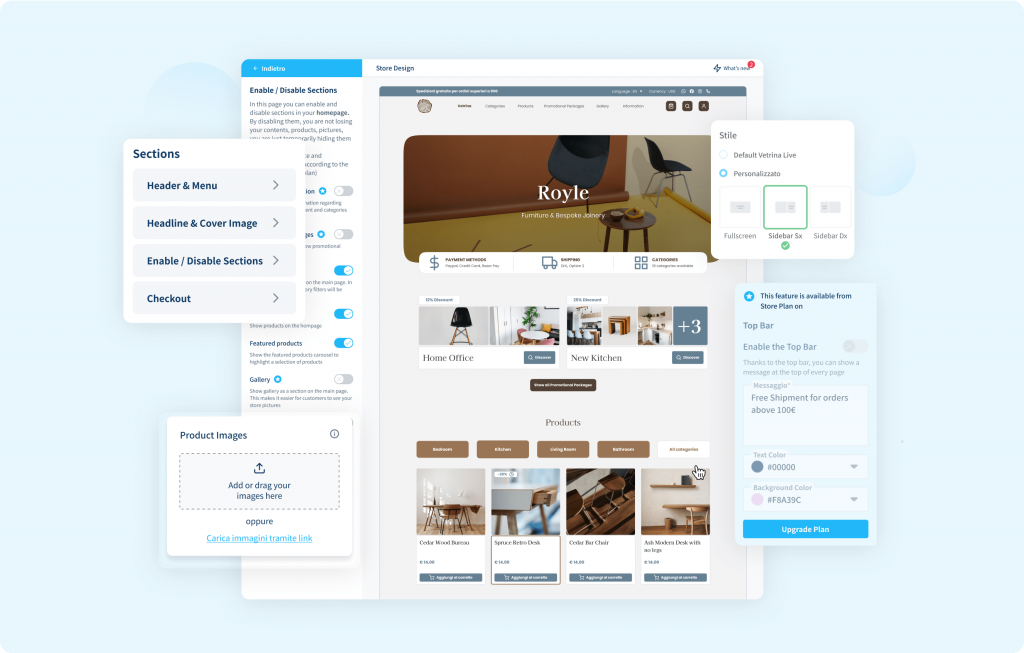
At Lasting Dynamics, we believe personalization is not just a feature, it’s a foundation of modern e-commerce. Through our work on platforms like Vetrinalive, we’ve seen how well-designed recommendation systems can reshape the way customers explore, discover, and connect with products.
Product recommendations today are driven by more than algorithms. They combine data, user behavior, and context to offer meaningful suggestions that reflect individual preferences. When implemented thoughtfully, they help customers find what they actually need, even before realizing it themselves. This balance between technology and empathy is what makes personalization truly effective.
In our experience, businesses that adopt intelligent recommendation strategies gain more than higher conversion rates. They build stronger relationships with their audience, streamline product discovery, and create smoother, more intuitive shopping journeys. Every interaction becomes an opportunity to understand the customer better and deliver more relevant experiences.
Smarter recommendations are ultimately about trust,showing customers that a store understands their needs and respects their time. For us, that’s the real value of innovation in e-commerce: technology that feels human, adaptive, and genuinely helpful.
Fra idé til lansering lager vi skalerbar programvare som er skreddersydd til dine forretningsbehov.
Samarbeid med oss for å akselerere veksten din.
In 2026, product recommendation engines have become essential for e-commerce success. They don’t just boost sales, they enhance customer satisfaction, strengthen loyalty, and create more engaging shopping experiences. Businesses that understand and apply this technology effectively are the ones leading their markets.
Choosing the right recommendation system is about more than algorithms, it’s about aligning technology with your customers’ needs and your brand’s goals. When implemented thoughtfully, these tools can transform how users discover products, personalize their journeys, and return for more.
The future of e-commerce belongs to those who use data and AI to anticipate what shoppers want before they ask for it. Now is the time to invest in smarter, more adaptive recommendation strategies that turn browsing into buying and engagement into long-term growth.
Ready to transform your e-commerce business with next-level product recommendation engines? 👉Kontakt Lasting Dynamics today for a personalized consultation and discover how our solutions can drive your growth in 2026 and many more years.
A product recommendation engine is software that suggests relevant products to customers based on their behavior and preferences. It’s crucial for ecommerce as it boosts sales, enhances user experience, and fosters loyalty.
AI enables product recommendation engines to analyze large datasets, learn from user interactions, and provide more accurate, personalized suggestions in real time.
Absolutely. Modern product recommendation software is scalable and can help businesses of any size increase conversions, average order value, and customer retention.
Look for real-time personalization, AI and machine learning support, easy integration, customizable algorithms, and a robust analytics dashboard.
Track key performance indicators such as click-through rates, conversion rates, average order value, and customer retention to evaluate the impact of your recommendation engine.
Vi designer og bygger digitale produkter av høy kvalitet som skiller seg ut.
Pålitelighet, ytelse og innovasjon i alle ledd.
Forvandle dristige ideer til kraftfulle applikasjoner.
La oss skape programvare som gjør en forskjell sammen.

Luis Lambert
Jeg er multimediedesigner, tekstforfatter og markedsføringsekspert. Jeg søker aktivt etter nye utfordringer for å utfordre ferdighetene mine og vokse profesjonelt.
