

Crafting Excellence in Software
Let’s build something extraordinary together.
Rely on Lasting Dynamics for unparalleled software quality.
Michele Cimmino
Feb 27, 2026 • 6 min read
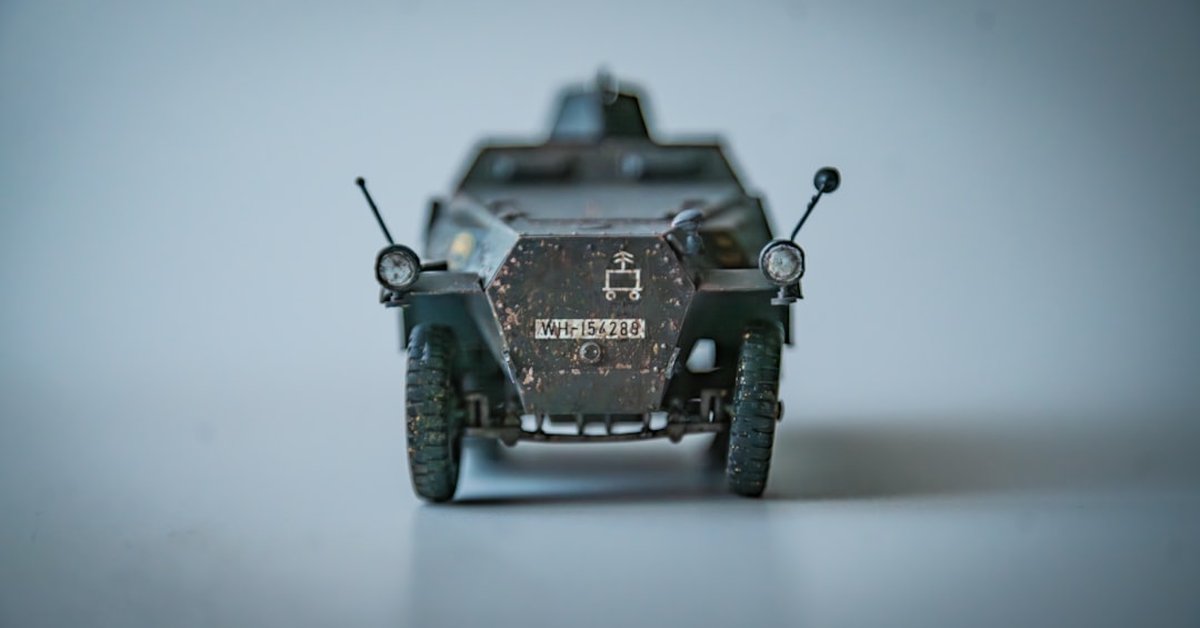
"We don't have infantry."
The quote, reported by Defense News in February 2026, comes from the Ukrainian front line. It is not a complaint. It is a description of strategy. Ukraine's war machine has evolved into a machine war — a conflict where the front line is increasingly held not by soldiers, but by drones, ground robots, sensor networks, and autonomous systems coordinated by software.
The numbers tell the story: in January 2026 alone, Ukraine logged over 7,000 ground robot missions, according to the Ukrainian Ministry of Defence. The vast majority were logistics and supply runs — delivering ammunition, evacuating wounded, pushing supplies to positions too dangerous for human couriers. But the capability is expanding rapidly. Ground robots now launch fiber-optic drones. Unmanned systems cue artillery strikes. Sensor networks provide persistent surveillance across sections of front where no human observer could survive.
This is not science fiction, and it is not a small-scale experiment. This is industrial-scale autonomous warfare, happening now, and it is rewriting the rules of military engagement for every nation watching.
The scale of Ukraine's demographic problem is staggering. Brigades have been hollowed out to 50–60% strength; some units are at 30%. The average frontline soldier is 43 to 45 years old. Roughly 200,000 troops are AWOL, and an estimated two million men are evading mobilization.
Ukraine's response has not been to simply recruit harder. It has been to replace human combatants with machines wherever possible — a strategic decision that is transforming how the war is fought.
El País reported in February 2026 that the transformation of front lines from tank warfare to robotic warfare is happening in real time: "We are in a stage with more unmanned systems that is heading toward a phase with autonomous systems in different domains."
The transition has layers. Aerial drones — from consumer-grade quadcopters dropping grenades to sophisticated fiber-optic FPV drones that can't be jammed — have become the primary strike weapon. Ground robots, both tracked and wheeled unmanned vehicles, perform logistics, reconnaissance, mine clearance, and increasingly, direct combat missions. Distributed arrays of acoustic, optical, and electronic sensors create persistent awareness over kilometers of front line. And integrated systems — ground robots that launch drones themselves — are creating multi-domain autonomous teams where a single operator controls an entire kill chain.
Forbes reported in February 2026 that both Russia and Ukraine are now deploying ground robots to extend and support their aerial drone warfare — the robotic arms race is self-reinforcing.
Perhaps the most telling innovation is Ukraine's "God Mode" app, reported by Defense News in February 2026: a centralized Mission Control application for drone warfare that includes a performance-based gamification model — drone units earn points for kills. The app is, fundamentally, a mobile software application. The most important weapon coordinator in the world's most intense war is a piece of software that could have been built by any capable SaaS development team.
Let’s build something extraordinary together.
Rely on Lasting Dynamics for unparalleled software quality.
The hardware of autonomous warfare is, relatively speaking, simple. A ground robot is a chassis, motors, a battery, and some sensors. An FPV drone is a frame, a flight controller, a camera, and a motor. The hardware cost of a basic combat drone can be under €500.
What makes these systems effective — what transforms a remote-controlled toy into a military capability — is software:
Autonomous navigation. Algorithms that allow vehicles to navigate terrain, avoid obstacles, and reach targets without continuous human control. This is especially critical in environments with GPS denial and electronic warfare, where traditional satellite-based navigation fails.
Sensor fusion. Software that combines data from multiple sensor types — cameras, LIDAR, radar, acoustic, infrared — into a coherent picture of the environment. A single sensor can be fooled; fused sensor data is exponentially harder to defeat.
Mission planning. Algorithms that translate a tactical objective ("deliver ammunition to position X, avoiding known threat areas") into a sequence of waypoints, maneuvers, and contingency responses. The more autonomous the mission planner, the less operator bandwidth it consumes.
Multi-vehicle coordination. When one operator controls multiple drones or ground robots simultaneously, the software must manage deconfliction (preventing collisions), task allocation (which vehicle handles which objective), and communication (maintaining data links in contested electromagnetic environments).
AI-powered target identification. Machine learning models trained to detect, classify, and prioritize targets from camera or sensor feeds. This is the capability that transforms a drone from a remotely piloted vehicle into an autonomous weapon system.
Operator interfaces. The "God Mode" app concept — giving a human operator intuitive control over complex autonomous systems. This is mobile app development, UX design, and real-time data visualization applied to warfare.
Every one of these capabilities is a software problem. The nations and organizations that build the best software for autonomous systems will have the most effective autonomous forces. Hardware is a commodity; software is the differentiator.
From idea to launch, we craft scalable software tailored to your business needs.
Partner with us to accelerate your growth.
Ukraine is the proving ground, but the race to build autonomous military systems is global — and Europe is an active participant.
Helsing (Germany/UK/France) — the AI defense company that received €268 million in German drone contracts — is building the software layer for European autonomous defense. Its platform is designed to make different hardware systems work together through a unified AI software architecture.
Auterion (Switzerland/US) has achieved what it calls a world first: a live-fire combat drone swarm where a single operator engaged three targets simultaneously using drones from different manufacturers. The key innovation was not the drones themselves — it was Auterion's Nemyx platform, the software that turns autonomous drones from different makers into a single, coordinated combat force. Auterion and Airlogix also launched a German-Ukrainian joint venture to scale autonomous drone production for Ukraine and NATO allies.
Milrem Robotics (Estonia) builds the THeMIS unmanned ground vehicle, used by multiple NATO forces. The platform is modular — the same chassis can carry different payloads for different missions — but the differentiator is the autonomous navigation and mission planning software. Stark Defence (Germany), the other recipient of the €268 million Bundestag contract, is a European startup building strike drone systems with heavy software content.
The EU itself is investing directly. The ALTISS program (Autonomous Long-endurance ISR Swarm System), funded by the European Defence Fund, is designed to move beyond the traditional "one drone, one operator" model toward autonomous swarm missions. SABUVIS II, managed by the European Defence Agency with a €3.7 million budget and participation from Poland, Germany, Portugal, Latvia, and Estonia, has completed trials of coordinated underwater drone swarms — extending the autonomous warfare concept into the maritime domain.
These are not future programs. These are live projects, with contracts awarded, trials completed, and production ramping up.
Anne Neuberger, former Deputy National Security Advisor for Cyber and Technology, wrote in Foreign Policy in February 2026 that technology has fundamentally reshaped modern warfare. Her analysis deserves attention:
Neuberger describes this as the era of "algorithm warfare" — a paradigm where the software algorithms controlling autonomous systems are more decisive than the hardware platforms carrying them.
The implications for defense procurement are profound. The traditional model — multi-year, multi-billion-euro programs to develop bespoke hardware platforms — is being disrupted by agile software companies that can field new capabilities in weeks or months. The US Army's drone school leadership made this explicit in February 2026: "If whatever they're building isn't modular with other industry partners, it's going to fall off our programs of record." The Army wants modular, plug-and-play, rapidly upgradeable systems — which is exactly what agile software development delivers.
We design and build high-quality digital products that stand out.
Reliability, performance, and innovation at every step.
The economics are equally disruptive. When a €500 drone can neutralize a €5 million vehicle, the calculus of military spending changes fundamentally. The value shifts from the platform to the software that makes the platform intelligent.
The Ukraine war has provided the most extensive real-world data set on autonomous military operations ever generated. The lessons are clear.
Software is the force multiplier. The hardware is increasingly commoditized, and the software — navigation, autonomy, coordination, operator interfaces — is what creates military capability. Speed of iteration is critical: electronic warfare measures evolve weekly, drone countermeasures change daily, and the software controlling autonomous systems must be updated continuously. A firmware update can render an entire defensive system obsolete, and the counter-update must be deployed in hours, not months.
Multi-domain integration is essential. Ground robots launching drones, sensor networks cueing artillery, underwater vehicles coordinating with surface vessels — the autonomous battlefield is multi-domain, and the software must integrate across platforms and environments. Agile development is not optional: the pace of autonomous warfare makes traditional waterfall development — requirements, design, build, test, over 12–18 months — operationally irrelevant. Defense organizations need partners who build in sprints, test in the field, and iterate continuously.
Finally, European autonomy requires European software. European defense organizations need autonomous systems built by European companies, under European governance, with European data sovereignty. Dependence on non-European software for autonomous weapons systems creates strategic vulnerability.
Behind every autonomous military system is software. The navigation algorithms, the sensor fusion, the mission planning, the operator interfaces, the AI-driven decision systems — all software. Companies like Lasting Dynamics, which specialize in building exactly these kinds of mission-critical, real-time, AI-powered applications, are the kind of partner defense organizations need as the autonomous warfare revolution accelerates.
The machines are already on the front line. The question now is who builds the software that makes them intelligent.
Lasting Dynamics builds real-time, mission-critical software systems with expertise in AI, mobile applications, and autonomous system integration. To discuss how our capabilities apply to autonomous defense systems, contact our team.
Internal Links:
- Europe's €800 Billion Defense Rearmament: Why Software Is the New Battleground
- AI Goes to War: Pentagon vs Anthropic and the Future of Military AI Software
- The $100 Million Swarm: How Drone Software Is Rewriting Modern Warfare
- Software Development for the Defense Industry: The Complete Guide
Transform bold ideas into powerful applications.
Let’s create software that makes an impact together.

Michele Cimmino
I believe in hard work and daily commitment as the only way to get results. I feel an inexplicable attraction for the quality and when it comes to the software this is the motivation that makes me and my team have a strong grip on Agile practices and continuous process evaluations. I have a strong competitive attitude to whatever I approach - in the way that I don't stop working, until I reach the TOP of it, and once I'm there, I start to work to keep the position.
