

Crafting Excellence in Software
Let’s build something extraordinary together.
Rely on Lasting Dynamics for unparalleled software quality.
Michele Cimmino
Nov 24, 2025 • 10 min read

Healthcare is experiencing a digital transformation unlike anything before, reshaping every layer of patient care, administration, and medical practice. What once felt like gradual modernization has accelerated into a wave of change, where digital records, connected devices, and automation are no longer optional tools but central elements of daily operations. Hospitals, clinics, and health systems now find themselves adapting not to abstract innovations, but to practical realities that redefine how medicine is delivered and experienced.
The pandemic served as both a test and a turning point. It exposed vulnerabilities in outdated processes while accelerating the adoption of remote consultations, digital scheduling, and real-time data management. What began as emergency measures quickly became the new expectation, proving that technology could not only maintain continuity of care under pressure but also expand access and efficiency in ways that traditional systems could not match. Patients and providers alike have come to see these tools as essential, not temporary.
For today’s healthcare leaders, this transformation carries both urgency and opportunity. Strategic decisions about digital health are no longer just about improving operations, they directly influence patient outcomes, staff well-being, and long-term sustainability. Now in 2025, it is crucial to recognize the trends shaping this landscape, not simply to keep pace with innovation, but to ensure that technology supports the deepest mission of healthcare and that is delivering safe, compassionate, and reliable care to every patient, everywhere.
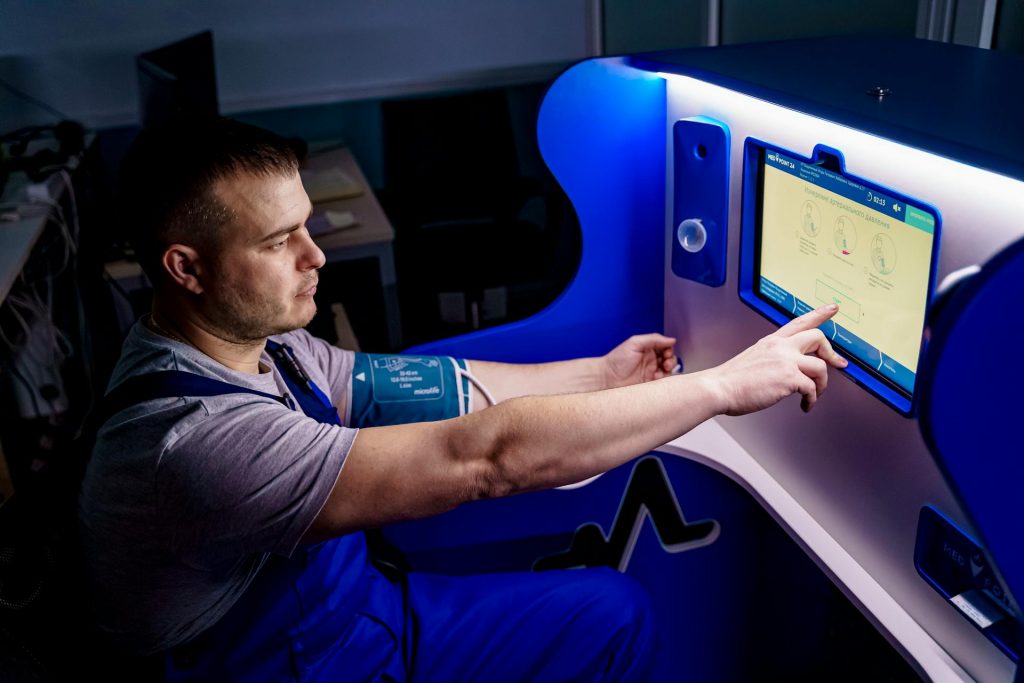
Digital Health for Every Patient. Photo by MedPoint 24 on Pexels: https://www.pexels.com/photo/a-man-sitting-at-the-self-service-health-machine-12203707/
Before 2020, virtual care was a niche offering. The pandemic thrust telehealth into the mainstream, forever changing how patients interact with their providers. Suddenly, video visits and remote consultations were not just convenient, they were essential. As restrictions lifted, many expected telehealth demand to wane, but instead, a new baseline was set: 80% of consumers now want ongoing access to remote patient monitoring and virtual care options.
Healthcare organizations have responded by investing in robust telehealth platforms that offer secure video, integrated scheduling, and seamless access to medical records. This shift has made it possible for patients in rural or underserved communities to receive timely care, and for busy professionals to fit appointments into their lives without major disruption. Yet, with convenience comes new expectations, patients now judge providers on the quality of their virtual interactions as much as in-person visits.
For healthcare executives, this means ensuring telehealth is not just available, but truly patient-centric. That involves training clinicians in digital bedside manner, enabling intuitive user experiences, and ensuring that virtual care is as comprehensive and responsive as traditional office visits. Organizations that get this right are already seeing stronger patient loyalty and broader reach.
Data is healthcare’s most valuable asset, but only if it can flow securely where it’s needed. Historically, electronic health records (EHRs) were siloed within hospital networks or even individual practices, creating fragmented patient journeys. In 2025, the push for interoperability is driving adoption of standards like FHIR (Fast Healthcare Interoperability Resources) and the growth of health information exchanges (HIEs).
These standards allow disparate systems to communicate, making it possible to share lab results, imaging, and care plans across organizational boundaries. The benefits are immediate: clinicians can make better-informed decisions, avoid duplicate testing, and spot critical trends in a patient’s history. For patients, interoperability means less paperwork and a smoother experience as they move between specialists or facilities.
Of course, connecting systems brings challenges. Security and privacy must be top priorities, as each new integration point is a potential vulnerability. Healthcare leaders are investing in secure APIs, robust consent management, and continuous monitoring to ensure that data sharing serves both clinical excellence and patient trust.
Virtual and augmented reality are moving from novelty to necessity in healthcare, offering immersive tools for training, rehabilitation, and patient support. These technologies allow providers to simulate complex clinical scenarios, enhance surgical planning, and even reduce patient anxiety during treatment. The shift highlights how immersive experiences are becoming part of the broader digital health transformation.
Real-world use cases already demonstrate impact. At University Hospital Bonn in Germany, surgeons train with VR and XR platforms like Medicalholodeck combined with NVIDIA CloudXR, enabling them to explore 3D reconstructions from CT and MRI scans before entering the operating room. Similar initiatives, such as VR simulations for neonatal resuscitation training, show that immersive environments improve confidence, skill retention, and outcomes compared to traditional methods.
For healthcare leaders, the opportunity lies in integrating VR and XR into daily practice, not as stand-alone experiments but as tools embedded in care pathways. In Lasting Dynamics we work with VR, XR, and AR projects, helping providers design and implement solutions according to their needs.
Every step toward digital health creates new opportunities, and new risks. Healthcare data is among the most valuable and targeted in the world, making cybersecurity a top concern. A shocking revelation is that about one-third of healthcare organizations experienced a ransomware attack, with average costs reaching $1.27 million per incident.
These breaches threaten patient trust, invite regulatory scrutiny, and can disrupt critical care. With more devices connected and more data flowing between systems, the attack surface grows daily. Healthcare executives are responding by investing in multi-layered security, including identity and access management, encrypted communications, and real-time threat detection.
But technology alone isn’t enough. Building a “security-first” culture is essential, staff must be trained to recognize phishing attempts, follow best practices, and report incidents quickly. In this environment, leaders who make cybersecurity a boardroom topic, not just an IT issue, are best positioned to protect patients and their organizations.
Let’s build something extraordinary together.
Rely on Lasting Dynamics for unparalleled software quality.

As digital health evolves, so do the regulations that govern it. Laws like HIPAA in the US and GDPR in Europe set strict requirements for protecting patient data, requirements that expand as telemedicine and cross-border care become commonplace. New regulations are emerging to address virtual care licensing, data portability, and even AI transparency.
For healthcare executives, compliance is both a legal obligation and a competitive differentiator. Organizations with strong compliance programs not only avoid costly penalties but also build deeper trust with patients and partners. Modern compliance management software helps track regulatory changes, automate reporting, and maintain comprehensive audit trails with less manual effort.
The challenge is ongoing: regulations shift, technologies change, and what’s compliant today may not be tomorrow. Forward-thinking leaders invest in flexible systems, continuous education, and partnerships with technology providers who understand the nuances of healthcare law.
Telehealth’s momentum has lasted well beyond the initial crisis, but integration remains a challenge. To truly deliver on its promise, telehealth systems must connect with scheduling, EHRs, billing, and even remote monitoring platforms. When these systems work together, care becomes more continuous and less fragmented.
For instance, integrating remote patient monitoring with virtual appointments allows providers to track chronic conditions in real time and adjust care plans without in-person visits. This is particularly valuable for patients with mobility issues or those living far from medical centers. As telehealth platforms mature, the focus is shifting from standalone video calls to fully integrated digital care ecosystems.
Healthcare leaders pursuing this path should prioritize interoperability and user experience, ensuring that neither clinicians nor patients are burdened by fragmented logins or data silos. Success here is measured not just in adoption rates, but in measurable improvements to outcomes and satisfaction.
Data interoperability isn’t just a technical goal, it’s a public health imperative. Governments and industry groups are pushing for national networks and global standards that allow health information to move securely and efficiently. Initiatives like the Trusted Exchange Framework and Common Agreement in the US, or cross-border health data sharing in the EU, are laying the groundwork for a more connected future.
For executives, this means choosing vendors and solutions that embrace open standards and invest in ongoing compatibility. The benefits extend beyond individual organizations: in times of crisis, such as pandemics or natural disasters, interoperable systems enable rapid, coordinated responses across regions.
The path forward isn’t without obstacles, different countries, states, and even hospitals may interpret standards differently. Yet, the momentum is clear: the healthcare organizations that lead in interoperability will be the ones best positioned to deliver safe, effective, and efficient care in a rapidly changing world.
AI’s impact is most visible where it touches patients directly. AI chatbots and triage tools now help route patients to the right level of care, answer common questions, and reduce wait times for basic interactions. Diagnostic AI systems analyze images or historical health data, supporting clinicians with second opinions and flagging abnormalities for further review.
But AI’s promise goes beyond efficiency, it helps personalize care at scale. Systems that analyze patient data can send reminders for medication, suggest lifestyle changes, or highlight preventative screenings. This kind of engagement not only improves health outcomes but also builds trust and loyalty.
The best solutions are those that support clinicians and patients alike, making care more proactive, accessible, and humane. An excellent example of this is Diagnostic Biochips, which turned to Lasting Dynamics to accelerate their work in neuroscience.

Given the scale of cyber threats, a reactive approach is no longer sufficient. Leading organizations are implementing proactive cybersecurity strategies, including zero-trust architectures and continuous monitoring. Identity and access management (IAM) solutions control who can access sensitive data, while regular penetration testing identifies vulnerabilities before attackers do.
Insurance and incident response planning have become part of the standard risk toolkit. Healthcare organizations are also collaborating with law enforcement and industry partners to share threat intelligence and strengthen defenses across the sector.
Ultimately, digital resilience is about more than technology, it’s about culture, policy, and leadership. Executives must champion security at every level and ensure that investments keep pace with evolving threats.
Digital health transformation is a journey filled with opportunities, but it is not without its challenges. As hospitals and clinics adapt to new technologies, they often encounter recurring issues that slow down progress or create frustration for both staff and patients. These challenges are not signs of failure but rather natural obstacles that arise when complex systems evolve. Recognizing them clearly is the first step toward finding sustainable solutions that allow innovation to thrive without sacrificing trust or quality of care.
The true promise of digital health transformation lies not only in treating illness, but in preventing it. AI is opening the door to predictive and preventive care, where algorithms can identify early risk factors for chronic diseases, anticipate mental health challenges, and personalize wellness recommendations. Instead of reacting to symptoms, healthcare systems can shift toward continuous monitoring and proactive interventions.
Wearables, connected devices, and EHR data feed these AI models, allowing providers to detect subtle patterns invisible to the human eye. For example, AI can flag irregularities in heart rhythms, changes in sleep behavior, or early metabolic markers that signal future conditions. Patients benefit from earlier interventions, while providers reduce long-term costs and improve outcomes.
This move toward preventive care powered by AI is redefining the role of healthcare organizations. They are no longer just treatment centers, but lifelong partners in health management.
From idea to launch, we craft scalable software tailored to your business needs.
Partner with us to accelerate your growth.
Lasting Dynamics has played an active role in advancing healthcare through strategic collaborations. A strong example is Diagnostic Biochips (DBC), a U.S. company in neuroscience research. Faced with the challenge of processing vast amounts of neural data, DBC turned to Lasting Dynamics, who built an AI-powered cloud platform that cut analysis times dramatically, turning months of work into weeks.
Another key project is INFANT, a platform created in Italy to improve pediatric oncology care. Designed under a public research initiative, it connects doctors, caregivers, and researchers in one digital ecosystem, reducing fragmentation and making collaboration around young patients clearer and more effective.
Although health is a major focus, Lasting Dynamics’ expertise is not limited to this sector. With extensive experience in AI and digital platforms, the company also delivers solutions across industries like finance, real estate, and education, always guided by the same principle: technology should serve people.
The digital transformation of healthcare is not slowing down. The leaders who embrace these five trends, telehealth, interoperability, AI, cybersecurity, and compliance, are redefining what’s possible for patients and providers alike. With the right strategy and partnerships, healthcare organizations can deliver care that is not only more efficient, but also more personal, secure, and resilient.
These innovations empower clinicians to make smarter, faster decisions, and give patients unprecedented access to their own health data, fostering engagement and trust. They also create a foundation for continuous improvement, enabling organizations to anticipate challenges, respond to emerging needs, and innovate with confidence.
Ultimately, the future of healthcare is digital, interconnected, and patient-centered. It belongs to those who are not just ready to adopt new technologies, but to lead with vision, collaboration, and empathy. By embracing this journey together, healthcare providers can transform the way care is delivered, making it safer, more accessible, and more compassionate for everyone.
Ready to move your healthcare organization forward? 👉 Contact Lasting Dynamics to discuss secure, innovative digital health solutions tailored to your needs. Together, we can shape a healthier, more connected future.
Telehealth remains crucial because patients expect convenient, remote options for care—80% want access to remote monitoring and virtual visits.
Interoperability enables seamless data sharing across systems, supporting better care coordination and reducing errors from fragmented records.
We design and build high-quality digital products that stand out.
Reliability, performance, and innovation at every step.
Healthcare faces high risks from ransomware and data breaches, about one-third of organizations experienced attacks during the pandemic, costing over $1 million per incident.
AI assists with diagnostics and automates admin tasks, helping providers cut administrative work nearly in half and focus more on patient care.
Adopt compliance management tools, stay informed about changing laws, and work with technology partners who understand healthcare requirements.
Transform bold ideas into powerful applications.
Let’s create software that makes an impact together.

Michele Cimmino
I believe in hard work and daily commitment as the only way to get results. I feel an inexplicable attraction for the quality and when it comes to the software this is the motivation that makes me and my team have a strong grip on Agile practices and continuous process evaluations. I have a strong competitive attitude to whatever I approach - in the way that I don't stop working, until I reach the TOP of it, and once I'm there, I start to work to keep the position.
