

Crafting Excellence in Software
Let’s build something extraordinary together.
Rely on Lasting Dynamics for unparalleled software quality.
Michele Cimmino
Mar 29, 2026 • 10 min read

Insurance no longer fits the old mold of a once-a-year contract tucked away in a filing cabinet. By 2026, businesses operate in a world where digital systems, remote work, and interconnected supply chains create new, fast-moving sources of risk. Next level insurance matters because it treats protection as an ongoing process rather than a one-time purchase, something woven into daily operations instead of waiting in the background until disaster strikes.
This mindset shift changes what companies expect from insurers. Decision-makers want coverage that responds to changing circumstances, gives insight into emerging threats, and helps reduce downtime when problems occur. In practice, that means insurers and insureds collaborate more closely, sharing data and using analytics to turn insurance into an active part of risk management.
Finally, adopting next level insurance is about resilience and optionality. Firms that integrate smarter coverage can recover faster, make bolder strategic choices, and allocate capital with greater confidence. For leaders, understanding this evolution is not a technical curiosity, it’s a practical tool for keeping the business running and competitive.

Take a new step with a next level insurance. Photo by Krakenimages on Unsplash: https://unsplash.com/photos/man-in-white-dress-shirt-sitting-beside-woman-in-black-long-sleeve-shirt-376KN_ISplE
At its core, next level insurance reframes insurance from a static legal instrument into a dynamic service model. Rather than describing a fixed set of exclusions and limits, it blends continuous data, automated rules, and human underwriting judgment to keep coverage aligned with real operational conditions. The result is a policy that can be more precise and better timed to actual exposures.
This approach grew out of two practical pressures, businesses moving faster through digital transformation, and a customer base demanding transparency and flexibility. As companies instrument more of their operations with sensors, logs, and telemetry, insurers can use those signals to measure risk more accurately. That creates opportunities for personalization, smaller firms get appropriate protection, and large enterprises get finer-grained policies that reflect diverse operations.
Importantly, next level insurance does not eliminate traditional insurance concepts, it augments them. Legal contracts, actuarial thinking, and capital considerations remain essential. What changes is the rhythm and granularity of the relationship, underwriting becomes more iterative, claims management more automated, and risk reduction more collaborative between insurer and client.
One central feature is real-time risk monitoring. By tapping into IoT devices, operational logs, or third-party data feeds, insurers and clients can spot degrading conditions or systemic threats early. That early visibility often turns what would be a catastrophe into a manageable issue by enabling rapid mitigation steps or temporary coverage adjustments.
A second feature is AI-driven policy customization and automation. Machine learning models can suggest coverage changes, price marginal risks, or detect fraud patterns faster than manual processes. This doesn’t replace human oversight, but it scales routine decisions and frees underwriters to focus on complex, high-impact issues.
Finally, seamless digital claims and always-available support tie the experience together. Mobile-first claims intake, documentless validation, and automated payouts reduce friction when something goes wrong. Around-the-clock assistance, sometimes via intelligent agents, ensures that operational teams can get practical help immediately. Together, these features make next level insurance not only more responsive but also more useful as an operational partner in managing risk.
Let’s build something extraordinary together.
Rely on Lasting Dynamics for unparalleled software quality.
At its heart, next level insurance brings together innovative features that set it apart from legacy solutions:
These features ensure that businesses are not just protected but empowered to manage risks proactively.
For decades, insurance was treated as a static transaction, a box to tick once a year and forget until something went wrong. That approach no longer fits the pace or complexity of modern business. Next level insurance introduces a cultural shift, it encourages organizations to think of risk not as a passive liability, but as an active field of management. Instead of waiting for losses to happen, companies now aim to predict, prevent, and minimize them before they materialize.
This change is as much about leadership as it is about technology. Executives play a central role in defining how proactive risk management becomes part of a company’s DNA. When leadership supports this mindset, teams begin to view insurance as a shared responsibility, one that protects operations, reputation, and customer trust simultaneously.
Digital transformation supports this evolution by providing the tools to act on data in real time. AI-powered analytics, sensors, and predictive dashboards help leaders make quicker, better-informed decisions. But the real transformation lies in perspective, the recognition that risk is not a cost to offload but a reality to understand and shape.
Traditional insurance has long played an essential role in protecting businesses, but its design reflects an older world, one where change was slow and data was scarce. The result is a system that often frustrates modern organizations. Manual claims processes drag on for weeks, generic coverage fails to fit unique industries, and communication gaps leave customers guessing about what is actually covered. For companies moving at digital speed, that friction feels increasingly outdated.
Another major shortcoming lies in visibility. Traditional insurers often provide protection after the fact but rarely offer meaningful insights before a loss occurs. Businesses are left in the dark about emerging threats, whether that’s cyber vulnerabilities, supply chain disruptions, or regulatory changes. Without timely feedback, leaders can’t plan ahead or mitigate effectively, turning insurance into a reactive tool instead of a strategic advantage.
These weaknesses create more than inconvenience, they create real risk. Delays in claims or mismatched coverage can lead to significant financial exposure, operational downtime, or reputational harm. That’s why next level insurance doesn’t just modernize processes, it redefines the relationship between insurer and client. It replaces opacity with transparency, delay with immediacy, and static coverage with adaptive protection.
Adopting next level insurance is not just about smoother operations, it’s about rethinking how protection contributes to business growth. When policies evolve in real time, they free organizations from the rigid structures that used to slow them down. A company that adds a new location, expands into a new market, or scales its workforce can see coverage update automatically, aligning protection with every stage of growth. That flexibility turns insurance from a constraint into a catalyst.
From idea to launch, we craft scalable software tailored to your business needs.
Partner with us to accelerate your growth.
Automation also reshapes the claims process, eliminating bottlenecks that once drained time and energy. Smart contracts and digital platforms make verification instant, allowing companies to recover quickly and focus resources on continuity rather than paperwork.
But perhaps the most powerful advantage lies in intelligence. Next level insurance actively helps businesses identify and address vulnerabilities before they escalate. With continuous monitoring and AI-driven analysis, it becomes a living system that adapts to new risks while controlling costs. Instead of paying for static coverage, companies invest in dynamic protection that evolves alongside them, empowering growth, innovation, and confidence in an unpredictable world.
Behind every next level insurance solution lies a powerful ecosystem of interconnected technologies. Artificial intelligence, for instance, enables systems to detect fraud, personalize coverage, and predict potential losses long before they happen. It acts as the analytical engine that transforms raw data into actionable insights. Meanwhile, the Internet of Things connects physical assets, vehicles, machines, buildings, to digital platforms, creating continuous visibility over operations. With real-time monitoring, insurers and clients can collaborate to reduce risks before they escalate.
Blockchain technology brings trust and transparency to processes that have traditionally been opaque. By recording every contract and claim event in an immutable ledger, it eliminates disputes and speeds up settlements. Big data analytics adds another dimension by identifying subtle patterns that would otherwise remain hidden, revealing which risks are emerging and which strategies are most effective. Combined, these technologies allow insurers to move from hindsight to foresight.
Automation ties the system together. By streamlining documentation, approvals, and compliance checks, it reduces friction and human error at every step. The result is a more responsive, efficient, and intelligent insurance experience. Together, these tools make next level insurance possible, not as a futuristic idea, but as a practical, working reality that redefines how protection operates in a digital economy.
Next level insurance changes the narrative of insurance from “a necessary expense” to “a strategic investment.” When coverage adjusts dynamically to your operations, businesses can pursue opportunities that once seemed too risky. Entering new markets, launching new products, or expanding across borders becomes less daunting when protection scales with you in real time. The adaptability of these models gives decision-makers confidence to innovate without constantly worrying about exposure.
Investors and partners also respond positively to this new kind of resilience. Demonstrating that your organization uses next level insurance signals a commitment to foresight and operational stability. It reassures stakeholders that your risk management is data-driven and that your recovery mechanisms are immediate. This confidence can translate into better funding conditions, stronger partnerships, and a more trusted brand reputation.
Ultimately, growth depends on continuity and that’s where next level insurance shows its real value. Fast claims processing, predictive alerts, and automated recovery procedures minimize downtime even in crises. Businesses can focus on scaling, not surviving. In this way, insurance transforms from a shield into a growth engine, empowering bold decisions with the safety of intelligent protection.
Adopting next level insurance can appear complex at first, especially for organizations with legacy systems and established workflows. However, modern insurance platforms are built with integration in mind. APIs and modular architectures allow them to connect with existing IT infrastructures smoothly, ensuring that data flows between systems without disruption. The goal is not to replace everything at once, but to improve what’s already working.
We design and build high-quality digital products that stand out.
Reliability, performance, and innovation at every step.
People, not just systems, also need to adapt. Effective training and change management are crucial for adoption. Fortunately, next level insurance solutions are designed with usability in mind, offering intuitive interfaces, clear dashboards, and responsive support teams. When employees understand the value and functionality of these tools, adoption becomes natural rather than forced. The technology then becomes an everyday ally rather than an external imposition.
Regulatory compliance, often seen as a burden, becomes simpler in this new framework. Automated compliance checks ensure that organizations meet evolving industry standards with minimal manual effort. Instead of increasing administrative work, next level insurance actually reduces it. With the right implementation partner, the journey toward smarter coverage becomes an opportunity to modernize processes, strengthen governance, and unlock new efficiencies across the business.
Selecting the right technology partner is one of the most important decisions when implementing next level insurance. A good partnership ensures that innovation translates into real operational benefits, not just new tools. The ideal provider should understand the specific challenges of your industry, from its regulatory frameworks to its risk patterns. Without that contextual knowledge, even the most advanced technology can miss the mark.
Equally important is the maturity of the technology itself. Proven platforms that have already demonstrated reliability and scalability in real-world conditions are far more valuable than theoretical solutions. The right partner should also provide ongoing support, adapting systems as your organization evolves and ensuring that your risk management capabilities grow in parallel with your business.
Insurance is undergoing one of the most significant transformations in its history. As digital ecosystems expand, next level insurance continues to evolve, shaped by new data capabilities and customer expectations. One of the most visible trends is hyper-personalization, using AI to tailor coverage in precise alignment with each company’s real operations and risk exposure. No two businesses face identical threats, and in 2026, policies will increasingly reflect that individuality.
Another major development is embedded insurance, where protection is built directly into digital products, platforms, and workflows. Instead of purchasing a separate policy, businesses and consumers experience coverage as part of the tools they already use. This frictionless model transforms insurance from a reactive purchase into an invisible, continuous service.
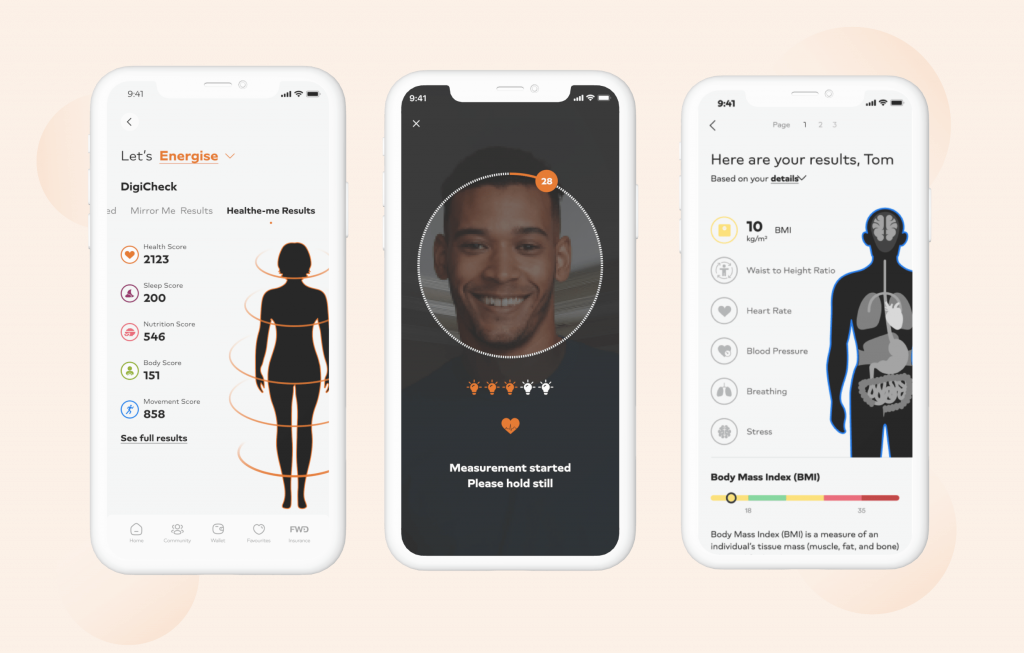
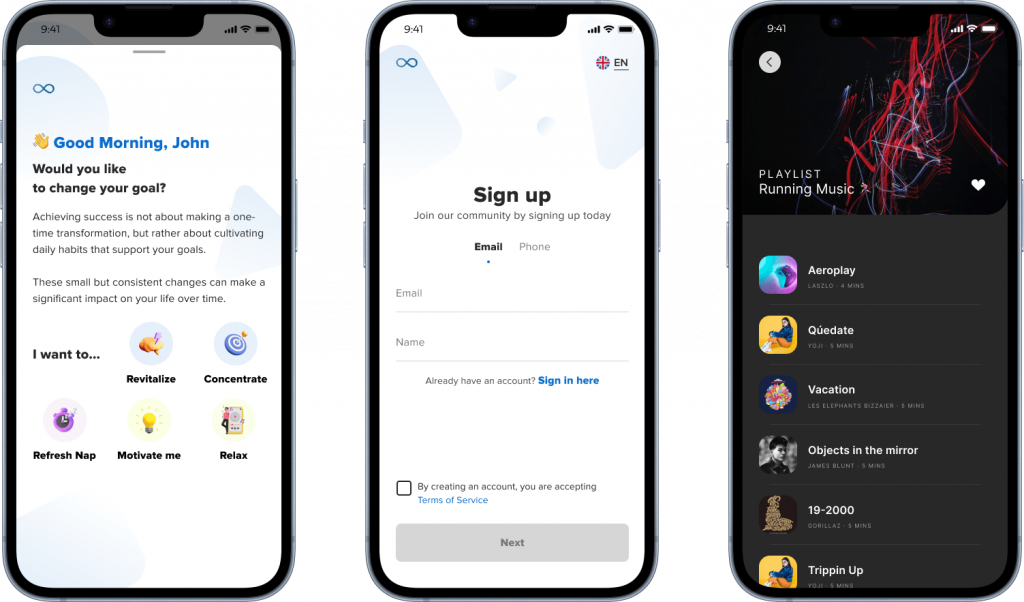
At Lasting Dynamics, we see technology as a way to make everyday experiences simpler and smarter. That idea came to life with All-in-One, a platform that brings insurance closer to people. It helps anyone,from individuals to small businesses, manage coverage easily, process claims faster, and stay protected through real-time data and automation. For us, it’s what next level insurance should feel like: practical, transparent, and built around real needs.
We followed the same philosophy with OMNE, a project designed to connect different digital services in one intuitive space. It focuses on making life more seamless, helping users access what they need without friction, all in one place. The same principles behind All-in-One, clarity, adaptability, and human-centered design, guide OMNE as well.
Both projects remind us why we build technology in the first place, to make life a little easier and a lot more connected. If that resonates with you, we invite you to explore more of what we’re creating at Lasting Dynamics.
The situation for 2026 is interesting, digital protection is more important than ever. Next level insurance equips organizations to thrive amid uncertainty by merging real-time data, automation, and proactive risk management. It’s not just about reacting faster when something goes wrong, but about preventing losses, adapting coverage dynamically, and empowering every decision with insight.
Businesses that embrace this evolution gain more than protection, they gain strategic freedom. With adaptive policies and predictive intelligence, leaders can innovate with confidence, knowing their operations are safeguarded. The companies that invest early in next level insurance are not just reducing risk, they are strengthening their ability to grow and compete in a volatile market.
Ready to future-proof your business with next level insurance? 👉 Contact Lasting Dynamics today and discover how our solutions can transform your risk management strategy.
Next level insurance uses advanced technology and real-time data to provide personalized, adaptive coverage for modern businesses.
It offers faster claims, proactive risk management, and cost efficiency, allowing you to focus on growth.
Yes, advanced security protocols and blockchain ensure data integrity and compliance.
AI, IoT, blockchain, and big data analytics are key components, enabling smarter coverage and automation.
Partner with a provider like Lasting Dynamics for seamless integration, training, and support.
Transform bold ideas into powerful applications.
Let’s create software that makes an impact together.

Michele Cimmino
I believe in hard work and daily commitment as the only way to get results. I feel an inexplicable attraction for the quality and when it comes to the software this is the motivation that makes me and my team have a strong grip on Agile practices and continuous process evaluations. I have a strong competitive attitude to whatever I approach - in the way that I don't stop working, until I reach the TOP of it, and once I'm there, I start to work to keep the position.
